Paint, Patterns and Places: Ossip Klarwein & Alvin Mavignier


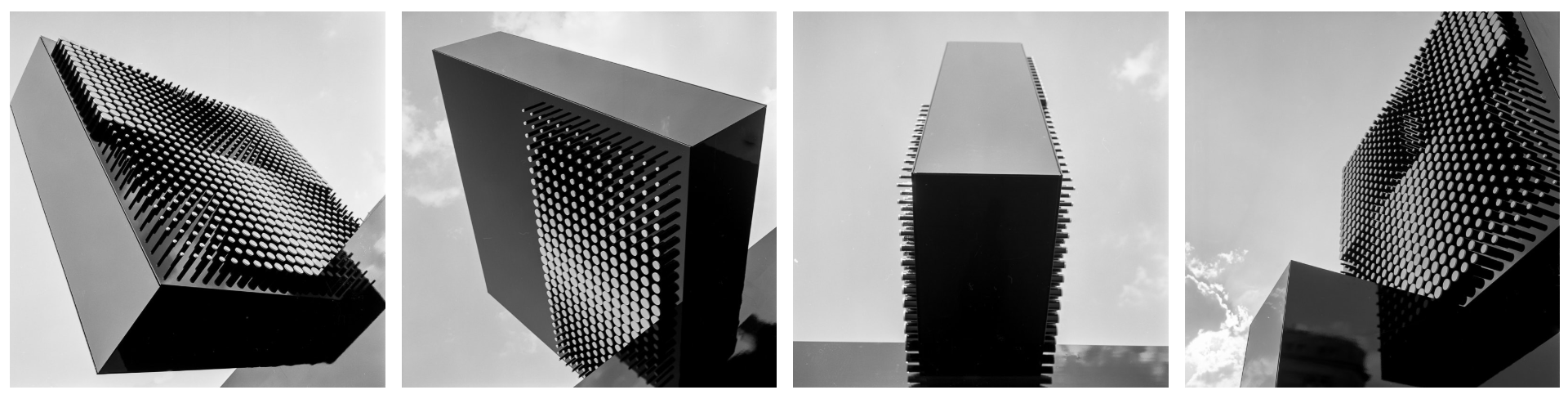
Almir Mavignier, convex, concave, convex, 1971 | photos Carlos Struwe 1975


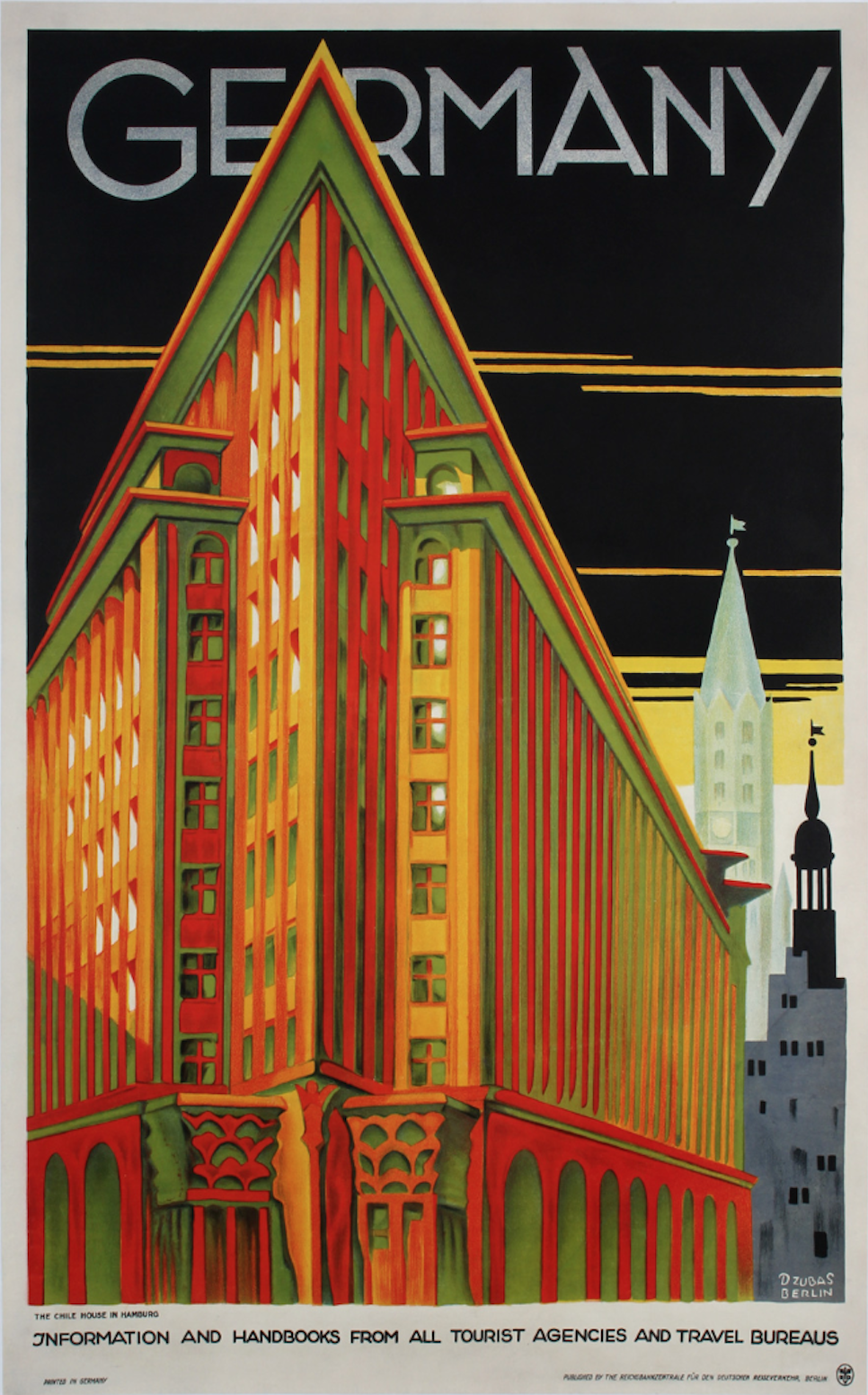
I’m sure you will know the Chilehaus – that ship‑like giant, built of brick, jutting out in Hamburg’s Kontorhaus district. It’s a landmark of Northern German Brick Expressionism, designed by Fritz Höger and completed in the early 1920s [see an image down below]. But little is known that this iconic landmark set the stage for another brilliant mind: Ossip Klarwein (1893–1970).

In 1927, Höger hired Klarwein as chief architect. Until 1933—a pivotal year in German history—Klarwein helped shape the look and ambition of Höger’s office. His influence reached beyond Hamburg, most famously with a Berlin church at Hohenzollernplatz, whose bold silhouette earned it the nickname “God’s power station.”

1935. Photo by Carl Dransfeld † 1941-11-09, Public domain, via Wikimedia Commons
Ossip Klarwein, Kirche Hohenzollernplatz, Berlin 1930-33 | photo by Carl Dransfeld, 1935 | public domain, via Wikimedia Commons

Ossip Klarwein was closely connected to Hamburg and the building styles of the North Sea region. When the Nazis took over in 1933, he was forced to leave for Haifa, Palestine. He first scrambled to gain a foothold, but by 1945, he was appointed to design key public buildings, thereby coining a Modernist style that would shape many later structures.

Many, only very recently excavated visual and written documents have been assembled to an exhibition of international collaboration: a collage of Klarwein’s life and work. Complemented by large-format pictures by the Israeli photographer Eli Singalovski (*1984). After its premiere in Berlin in October 2025, it is now showing at the Ernst Barlach Haus, as one of over forty contributions to The Jewish Cultural Heritage Days, 2025.

This, however, is only half of the “story” –

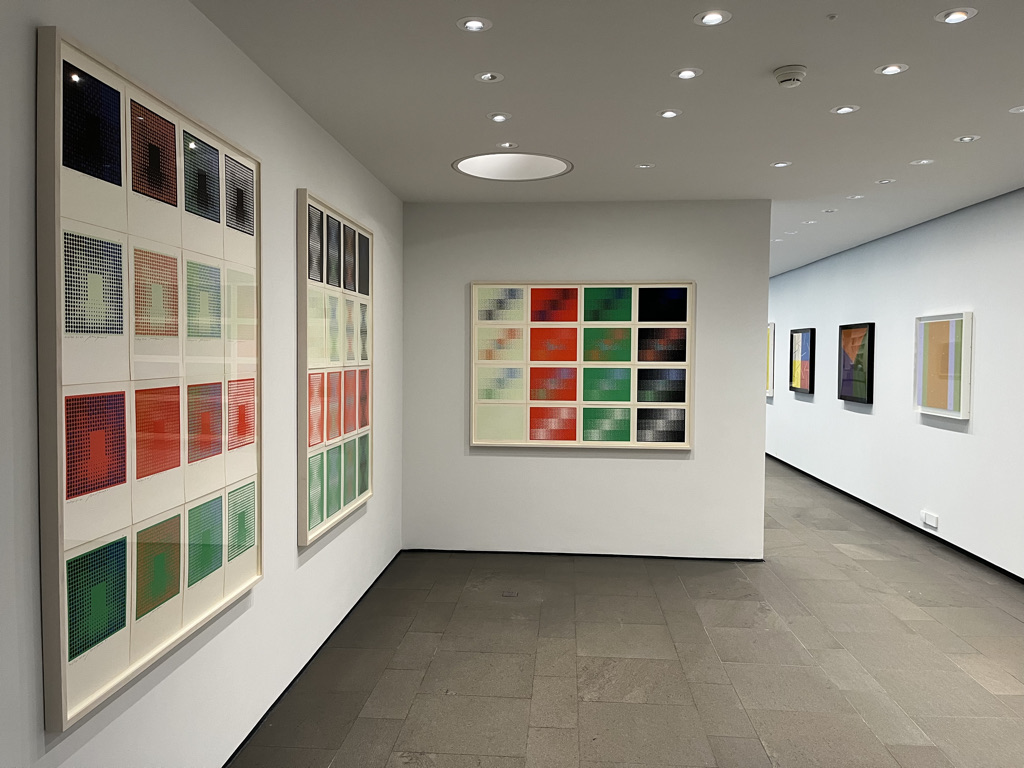
The Barlach Haus with its white, rather modest façade, does not immediately suggest that it can comfortably host two exhibitions at once – and yet it does. In the other half of the museum it feels like stepping into a very different universe: one of vibrating colour fields, serial structures and optical surprises. Here the atmosphere shifts towards Op Art – a movement many have heard of, but fewer could confidently explain, which is exactly what we will be exploring during the second half of our visit.

At the heart of this second “chapter” is Brazilian‑born artist Almir Mavignier (1925–2018), who had a deep and lasting connection to Hamburg. Mavignier is recognised as an important representative of Concrete Art and Op Art, who taught for 25 years as a professor at the HfbK, influencing generations of students. His artistic path began early in Brazil, where he worked simultaneously as painter, graphic artist and teacher.
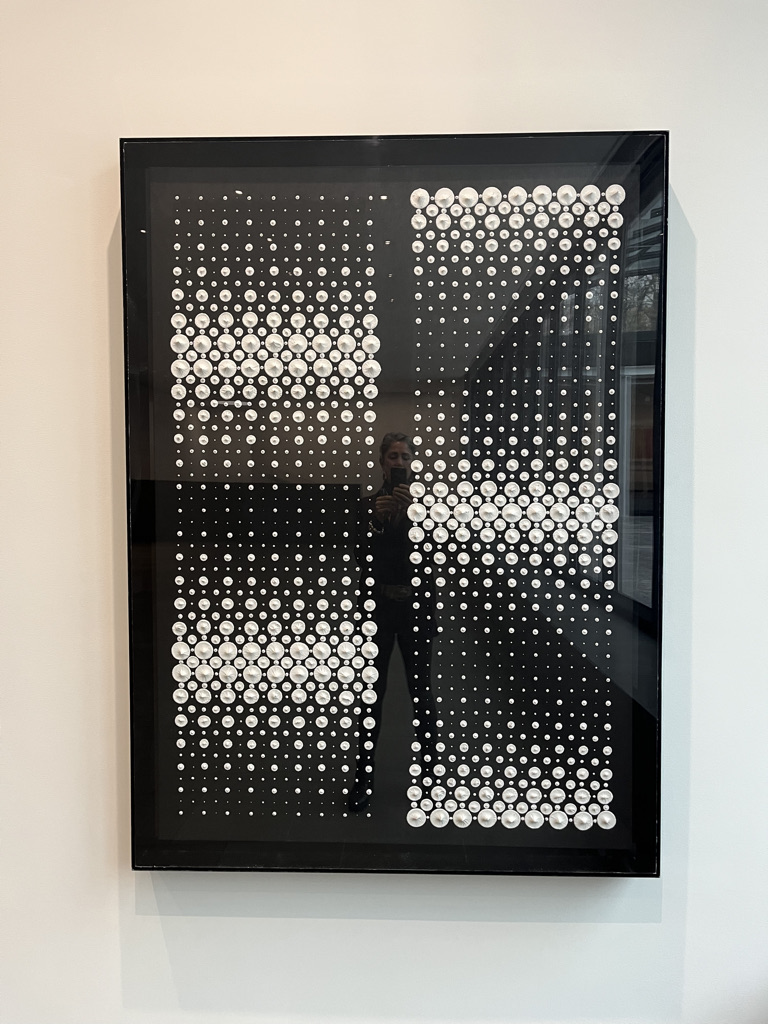
An especially formative period was his work leading an art studio in a psychiatric clinic, where he experienced first‑hand how powerful simple forms and colours can be. Mavignier’s international breakthrough came after he moved to Paris and later to Ulm, where close contact with artists and thinkers such as Max Bill and Josef Albers sharpened his interest in systematic colour experiments and serial structures.

Instead of telling stories with figures or landscapes, Op and Concrete Art work with perception itself: grids, dots, lines and pure color are arranged so precisely that your eyes begin to do the “moving” for you. Standing in front of these works, you may notice patterns that seem to shimmer, tilt or pulse, even though the canvas is perfectly still. The longer you look, the more your own vision becomes part of the artwork.

If you are in Hamburg, Germany then you may have even unknowingly walked past one of his few large outdoor sculptures titled convex concave and convex that was installed in 1971 at the Kirchenallee, Hamburg Hauptbahnhof. The complicated process of assembling the over six metres tall, black and white sculpture is documented on the official Mavignier website, run by his artist-son, Delmar Mavignier. It includes a full-length interview with the Almir Mavignier and shows many detailed, contemporary photographs by Carlos Struwe.

In the context of the Klarwein exhibition, Mavignier’s works add a rich counterpoint: while Klarwein builds with concrete and space, Mavignier builds with colour and perception – but both with the principle of organising spaces with repetitive patterns. Let’s explore these two remarkable modernists at Ernst Barlach Haus in Hamburg by booking tickets for my next tour here:

Book online

Songs in the Key of Orchids: Art Meets Nature

For German click here:


My love for nature has been lifelong. But it wasn’t until my first visit to Southern California that I encountered a botanical garden of such grand scale and diversity as the Huntington Gardens in San Marino, Pasadena.

Spanning 207 acres, the meticulously cultivated gardens at Huntington reveal a breathtaking array of plant life – from arid desert succulents to delicate orchids – that I had never experienced before. This extraordinary place has since become a recurring source of astonishment and inspiration for me, deepening my connection not only to all wondrous shapes and forms of nature but also to its creative and restorative powers.

One of their brand-new projects, thus, events, titled Orchidées, which was being advertised in one of the Huntington Gardens’ newsletters, caught my immediate attention. Its elegant French title resonates naturally with my love of the French language and culture, as you may be aware of from from of the songs I perform. But also because it showcases an innovative blend of science and art.


🪴 Orchids in Motion: Science Meets Artistic Expression

Orchidées is a world premiere musical composition scheduled for October 2025 at The Huntington’s renowned Orchid Show in California. Conceived by the Irish composer Nick Roth in close collaboration with botanist Barbara Gravendeel and her team at Naturalis Biodiversity Center in Leiden, Netherlands, this work translates the very DNA sequences of orchids into a five-movement cello composition.

Each of these sections or movements represents a different orchid subfamily, rendered through the intricacies of genetic coding transformed into musical motifs. The performance is accompanied by mesmerising time-lapse films capturing orchids blooming in real time, creating a profound sensory dialogue between sight and sound.


🪴 Orchid’s Darker Roots

This unique musical project stands as a beautiful homage to these flowers’ enduring power to inspire. It emphasises the grandeur of historic collections on the forefront of scientific exploration, underscoring their place as emblematic messengers of biodiversity and cultural heritage. It is, thereby, impossible to separate the story of these elegant wonders from a darker reality.

The oldest known reference to orchids was made almost 3000 years B.C.E. ago. But it wasn’t until the late 18th century that these flowers were discovered for a highly lucrative European market. The mid-to late 19th century triggered a down-right orchidelerium, thus evoking a period of great drama regarding the pursuit of ever-new and exotic orchids.

So-called plant hunters resorted to exploiting indigenous knowledge and even damaging wild habitats in their search for rare blooms. This sometimes ugly history of beautiful things is a complicated story. But orchids still manage to spark an extraordinary exchange between people and cultures that goes far beyond plants themselves. It’s one that spans centuries and continents, inspiring collectors, musicians, and artists alike, shaping not only scientific study but also the history of places and architectures, like the one I’m about to tell you about…”


🪴 My Orchid Home: The Rich Heritage of the Jenisch Haus

What better place than the Jenisch Haus in Hamburg to leave my “prized” orchids, I thought, the last time I went on travels during the winter months.

Why there? You may ask…

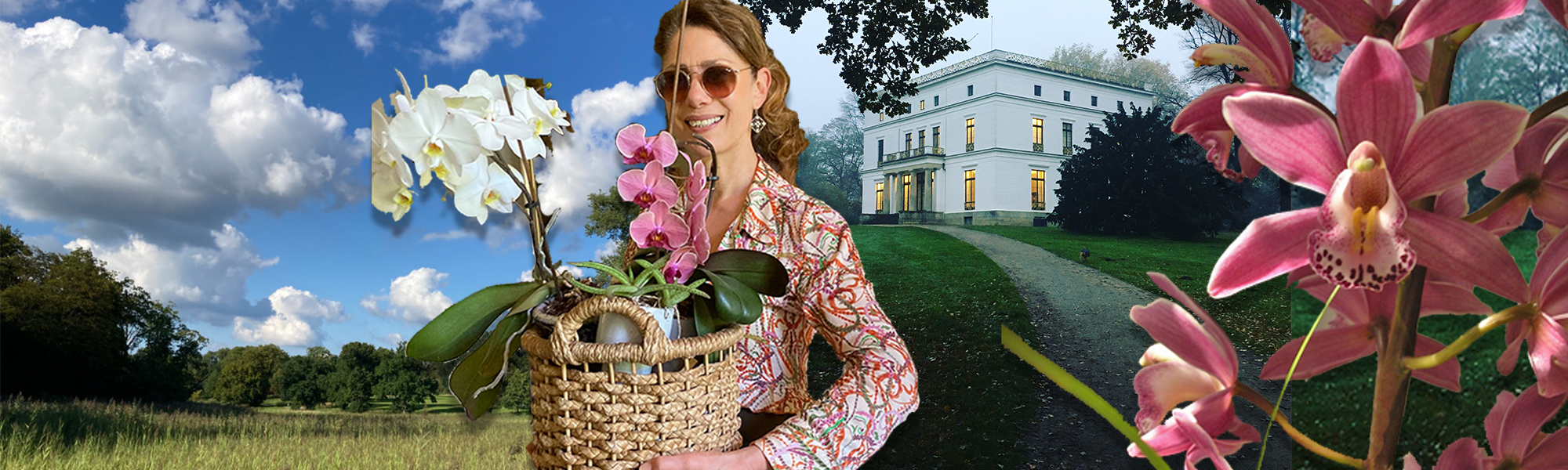
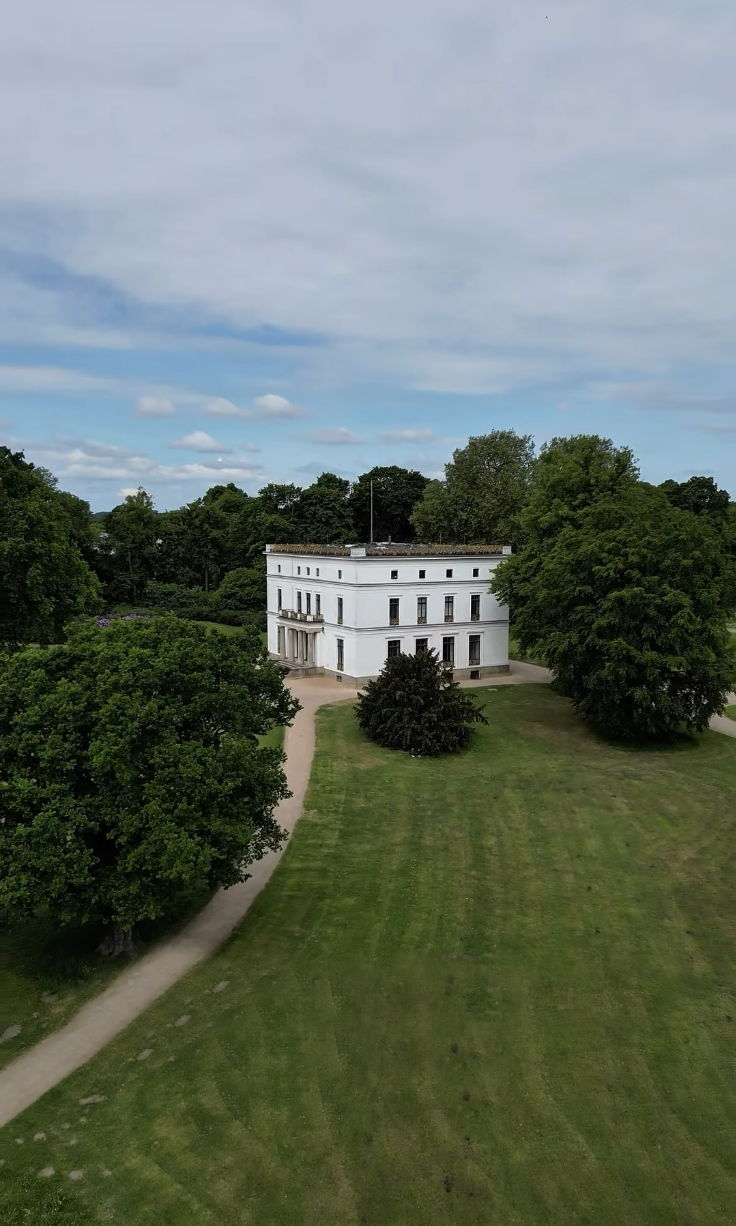
Well, for starters, I have got a special relationship with the Jenisch Haus where I work as a tour guide whenever I am in Hamburg. It’s not really a Haus but is an incredibly picturesque 19th century villa that crowns its lush surroundings, the romantic Jenisch Park, like a jewel. It has been open to the general public as a museum since the 1950s and often serves as a backdrop for elaborate wedding photos, prestigious gatherings and intimate classical concerts. So orchids fit right into the picture.

The enchanting surroundings elevate the whole image. It was designed in the 1830s as an undulating and lush English landscape park with a recently established nature reserve, a historic pleasure garden and an arboretum with the oldest still living Gingko tree in Hamburg.

My affinity for this setting is no coincidence. As someone shaped by the Suffolk countryside, I am drawn to it with an almost instinctive familiarity, as though the landscape resonates with an inner topography inherited from place and upbringing.

Constructed between 1831 and 1834, the neoclassical villa stands as one of Hamburg’s most iconic and architecturally significant landmarks. It involves the designs of two prominent architects, Gustav Forsmann (1795–1878) and the famous Prussian design genius, Karl Friedrich Schinkel (1781–1841). It served its owners, Martin Johann Jenisch (1793–1857) and his wife, Fanny Henriette (1801–1880), as a luxurious summer residence. Both came from considerable wealth, which enabled them to acquire the former estate of the prominent overseas merchant Baron Caspar Voght at Klein Flottbek. Moreover, they transformed it into a prestigious garden and scientific horticultural site.

Particularly through Jenisch’s extensive collections of paintings, sculpture, tropical trees and orchids, he significantly shaped the cultural and botanical heritage of Hamburg.

At the turn of the 19th century, nature was philosophically and aesthetically a strong focus of the upper class as a source of inspiration. This is also reflected in many architectural elements of the villa: The inlays of the parquet flooring in the ladies’ drawing room, the spacious and representative design of the vestibule and the garden salon, with a majestic view of the river Elbe. In both material and layout, these were refined and elegant social spaces that connected interior life with nature, embodying key neoclassical ideals such as symmetry, order, and harmony. Its prototypes stemmed strictly from the architectural remains of classical antiquity, such as temples and villas.

The overall positive reception and popularity of these sites directly motivated the so-called Grand Tour of Italy. Especially for the British elite and Northern Europeans, the Grand Tour became a rite of passage for aristocratic young men, who travelled to Italy in the 18th century, to study and experience the ancient ruins. Key stops included Rome, Florence, Venice, Naples, and archaeological sites like Pompeii and Herculaneum. These wealthy travellers often commissioned artworks or acquired antiquities for their homes, like Jenisch did on three extensive tours to Italy, while his villa was being built.


🪴 Jenisch’s Collections: Artworks, Trees and Orchids

This is how, over the years, the Hamburg senator Jenisch was able to assemble a distinguished collection of artworks. He was a passionate and influential collector, with a focus on German painters active in Italy during the 19th century. Among them notable German painters such as Johann Friedrich Overbeck, a leading figure of the Nazarene movement, who revived early Renaissance styles with religious themes, and aligned with the intellectual and cultural values of the time. Jenisch’s passion for collecting extended to the creation of a carefully curated arboretum within his estate’s pleasure grounds, showcasing rare and exotic trees that embodied the period’s enthusiasm for discovery and botanical exploration and study.

Jenisch was especially renowned, however, for his orchid collection that comprised over 1,000 species from more than 144 genera, including rare specimens from Africa, Asia, and the Americas. It was considered one of the foremost in Europe during the 19th century. His catalogue was exhibited at prestigious garden shows, placing it among the foremost collections that rivalled those of London’s horticultural elite. It attracted many visitors and dignitaries, including King Christian VIII of Denmark, illustrating its international esteem.


🪴 Greenhouses: Cultivating Rarity and Beauty

Essential for compiling Jenisch’s vast collection was his head gardener Friedrich Berthold Kramer. Before joining Jenisch in 1833, he had worked as a gardener at the Hamburg Botanical Gardens (known today as the Old Botanical Garden), originally established in 1821 on the site of the former city fortifications and now part of Planten und Bloomen. Kramer was known for his horticultural skills and international contacts: He imported plants directly from overseas, maintained relationships with British and Hamburg nurseries, and exchanged specimens with leading botanists, such as Heinrich Gustav Reichenbach. He thereby contributed significantly to the scientific reputation of Jenisch’s collections.

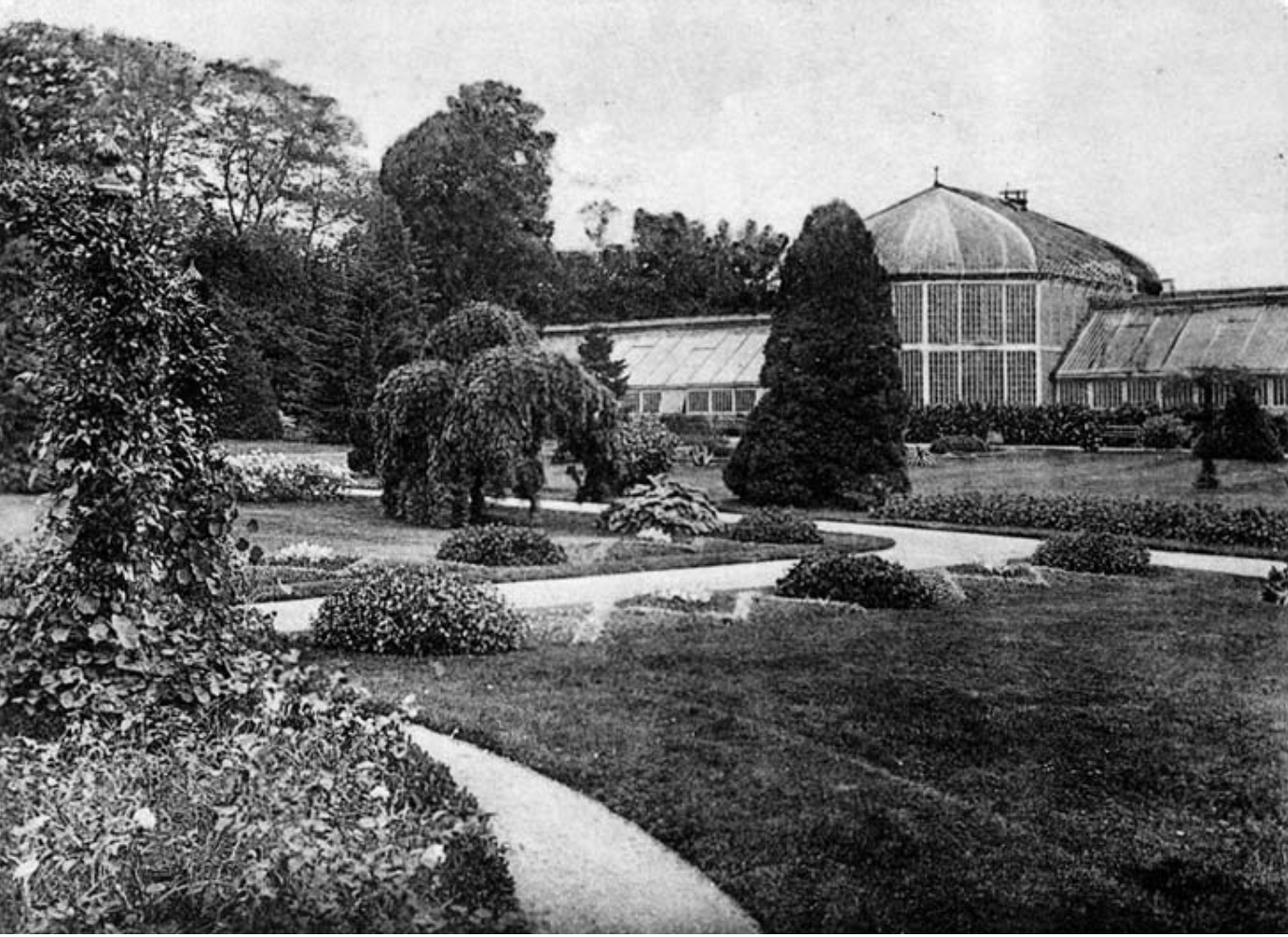
Jenisch Park, greenhouses, Postcard from 1908

Kramer moved into a house on the estate grounds, now the site of the Bargheer Museum. Under his supervision, several new greenhouses were constructed to house Jenisch’s growing refined collection of tropical and rare plants to provide the necessary controlled environments for these delicate flowers and plants. A picturesque photograph of the structure, including a part of the gardens, was even sold as a postcard in 1908.

It was the English gardener and architect Joseph Paxton (1803–1865), who pioneered the use of separate glasshouse conditions to suit the climatic needs of the different orchid species. He had realized that to simulate the orchids’ natural habitat, light and air movement was essential. Paxton, an accomplished architect also designed the famed Crystal Palace in Hyde Park, London, for the Great Exhibition of 1851. [History of Orchids p. 12]

Throughout Europe, greenhouses symbolised technological progress and status, offering ideal growing conditions for prized plants – even during cold and wet Northern winters. But they were also costly status projects. Contemporary records suggest that due to specialised glass, ironwork, and heating installations, elaborate greenhouses could cost more per square meter than residential buildings. Albeit having been built at a considerable expense, Jenisch’s greenhouses were torn down and replaced in the 1950s.


🪴 What’s your Name? Orchids and the Linnaean System

Beginning in the 18th century, orchids became an obsession among many European collectors and merchants. Most of these specimens from this diverse and rapidly expanding botanical world entering collections from territories in Asia, Africa, and the Americas remained unclassified. Common names proved too ambiguous. They varied widely by region and language, and could refer to multiple different species.

To assign unique, universal, and stable scientific names to individual plants, the Swedish botanist Carl von Linné (Linnaeus) developed a binomial nomenclature system. This system is composed of two parts: the genus and species. The first name, the genus, groups related species. The second part is the species epithet, identifying the individual species within that genus. It still constitutes the foundation of modern botanical classification, allowing scientists worldwide to clearly and precisely identify plants without confusion from varying local or common names.

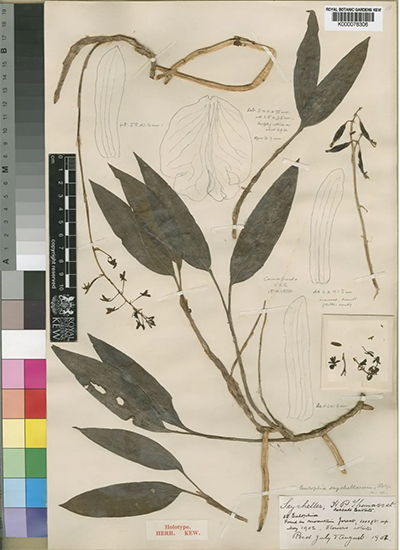
This image (© RBG Kew) stems from the herbarium of the Royal Botanical Gardens, Kew, which was in 2024 fully digitalised) shows the Oeceoclades seychellarum, which was named for example, after the island on which is was initially found. The Seychelles Orchid, also tells a poignant story of loss and the fragility of island ecosystems. Once deemed rare, this orchid is now sadly extinct.

Linné’s taxonomy was embedded in Enlightenment ideals of rationality and order, but also in the complex colonial and commercial networks through which novel plants reached European horticulture. Many orchid names honour European explorers, scientists, collectors, or patrons, like the sought-after orchid Stanhopea, named after the Earl of Stanhope, known for his wide-ranging contributions to science and engineering. But in retrospect, many of these designated names were problematic. Ethical concerns about colonial exploitation of people and land were generally ignored. Instead, colonialism was used as a means or instrument to advance scientific research and imperial expansion.


🪴 Rarely Adopted Indigenous Names

Indigenous names for orchids were rarely adopted in formal scientific naming for several reasons linked to historical, cultural, and scientific practices of the 18th and 19th centuries. The scientific taxonomy system favoured these universal, standardised Latin names over their original, local vernacular names, which, like in Europe, varied widely among indigenous groups and locations. Furthermore, European botanists often lacked access to or understanding of indigenous languages and naming systems. At the same time, this practice reflects broader colonial and imperial dynamics where indigenous knowledge was often overlooked or marginalised. However, some recent efforts and specific cases have preserved or reintroduced indigenous names within botanical Latin or common usage to recognize original cultural ties.

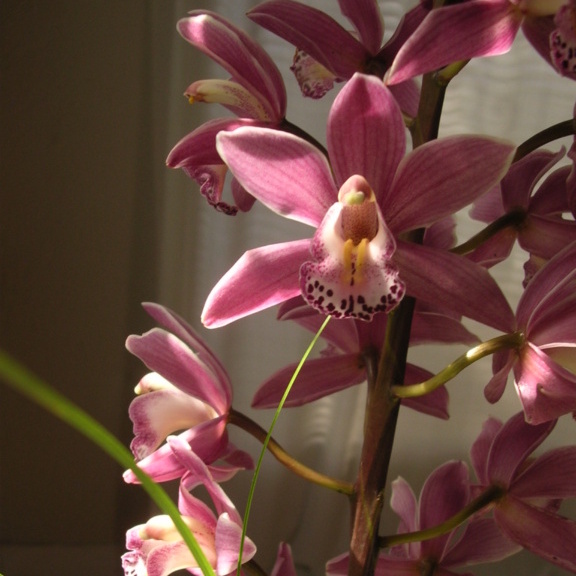
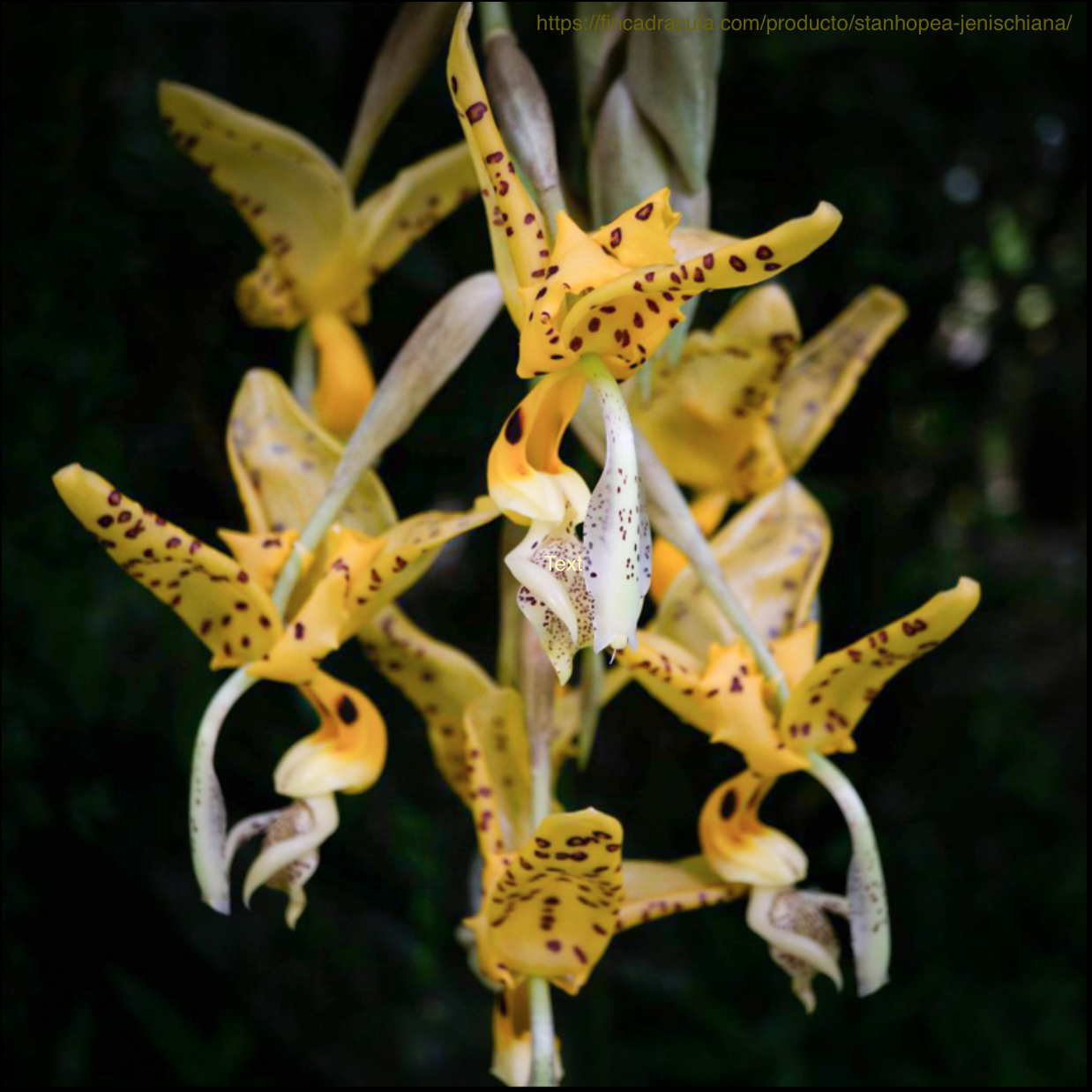
This is why it’s no surprise that not only the villa and park but also an orchid species, Stanhopea jenischiana, carries the name of its patron, Martin Johan Jenisch. Native to Colombia, Ecuador, Perú and Venezuela, the Stanhopea jenischiana has got – like you can see in the photograph above – an orange-yellow colour with brownish spots and is said to have a sweet floral fragrance. It captures many phenomena that shape orchid heritage. Because lastly, it was the estate’s head gardener, Franz August Kramer and Heinrich Gustav Reichenbach in 1851, who nurtured the orchid to bloom. This is a reminder that botanical glory often rested on the work of those behind the scenes – much like the hidden staircases within the Jenisch villa, which I reveal exclusively to small groups on my private tours, offering an intimate glimpse behind the scenes of this fascinating estate.

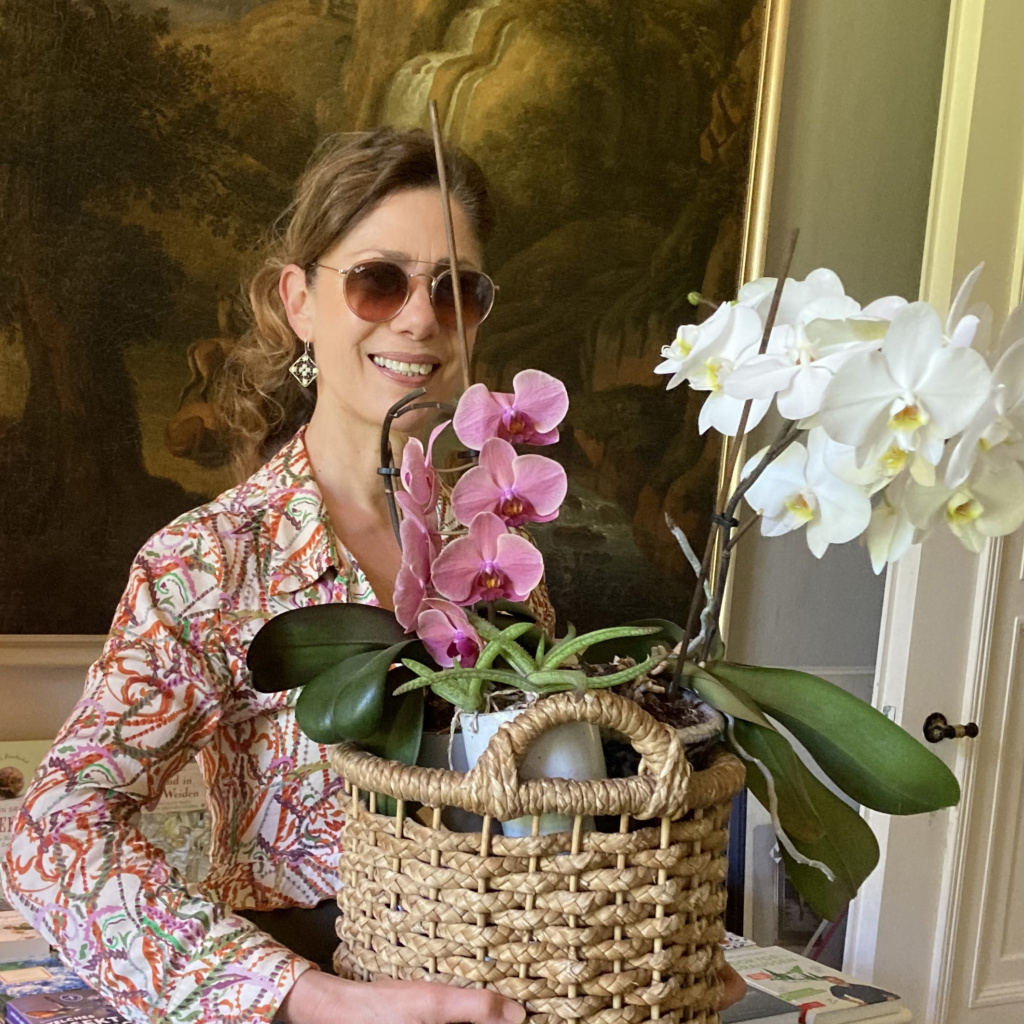
Though I entrusted my own “prized” orchids, the Orchidea Aldiæ Francesii, to the historic Jenisch Haus during the winter months, their fate was sealed by the estate’s original design as a summer residence with limited heating. And, if you take a closer look during one of my tours, you will see that the orchids on display there today are, quite simply, replicas – merely an echo of the original collection’s beauty and fragility.

Yet, this very fragility is what makes projects like Orchidées so powerful: By transforming the genetic blueprint of orchids into music, performed for an audience as a concert, it breathes new life into their legacy, transcending the limits of physical survival. In this way, orchids continue to inspire – rooted in the past, flourishing in the present, and blossoming in entirely new artistic forms. The brief tenure of my Orchidea Aldiæ Francesii, the modest Aldi orchids I had purchased for a fraction of what they would have cost during Jenisch’s time, and that I left at Jenisch Haus, were no less part of the story.

👉🏼 Discover the hidden stories of the Jenisch Haus and Park, where orchids, art, history, and nature converge. Join my exclusive guided tours for an intimate experience of this iconic Hamburg estate’s botanical and cultural treasures.

👉🏼 Contact me here to book your tour:

    This form uses Akismet to reduce spam. Learn how your data is processed.


    The orchids grow in the woods and they let out their fragrance even if there is no one around to appreciate it. Likewise, men [and women] of noble character will not let poverty deter their will to be guided by high principles and morals.
    If you are in the company of good people, it is like entering a room full of orchids.

    ~ Confucius (551–479 BC) translated by Alice Poon


    Did you enjoy reading this post?


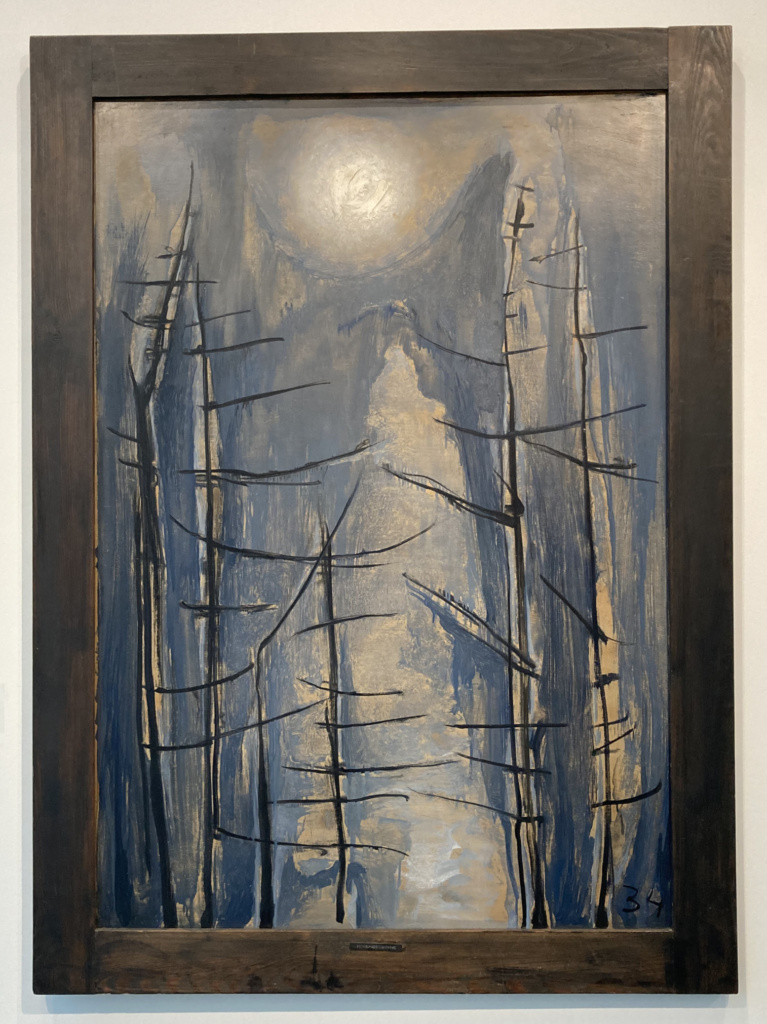
    Novembersonne


    Werner Scholz. A Forgotten Painter of the Weimarer Republic

    Seated at my breakfast table, I had been looking out through large windows, across the heavy and sturdy roofs of the houses opposite, into the vast, always grey-tinged Northern German skies, pen in hand. It was hard to pinpoint my feelings, bedded in a deep-rooted sense of anguish. There was still so much grief and sadness, often disguised as anger or rage mixed with isolation and loneliness. I longed for warmth, rich, warm colours, golden hues – for a simple hug, an embrace from some source of warmth and care. The gothic light and the ever-impending sense of doom was gnawing at me.

    Little did I expect, a few days later, to walk into an exhibition and be greeted by those very feelings from my diary entry in the form of a painting. But there I was, in a spacious, well-lit and elegant art museum, the Ernst Barlach Haus. From the entrance area, I could already see the picture, which was displayed as the first artwork of this newly installed show, from afar and I was immediately drawn towards it. I’m in a very inquisitive and highly susceptible mood. After all, this German artist, Werner Scholz (1898–1982) is being placed amongst other world-famous artists of his time such as Rudolf Schlichter, Georg Grosz, Karl Hubbuch or even Otto Dix – but hardly anyone has ever heard of him.

    A quick search on the internet before my visit had only resulted in a handful of very rudimental information on him, like from one small past exhibition and auction prices that were nowhere near those of his contemporaries. Titled, Werner Scholz. Das Gewicht der Zeit (The Weight of Time) this exhibition shows paintings that were not destroyed when Scholz’ studio in Berlin was hit by a bomb in 1944. In 1937 the Nazis had banned him as a ‘degenerate’ artist from working and exhibiting. Scholz withdrew to Tirol in 1939.

    I step closer to gain a better look: It is quite a large piece in portrait format, which is unusual for a landscape painting. It is still in its original very simple, dark wooden frame, which bears a small plaque at the bottom with its title: Novembersonne (November sun). It merely depicts bare black trees and the sun. There is no depth in the picture, no foreground or middle ground, just broad, slightly erratic vertical washes of gloomy blueish-grey shades interspersed by some streaks of white, even leaving in parts, the painting’s ground visible, interrupted by stick-like trees that make me think of the German word Strichmännchen (small stick man). Its central motif, like the title indicates, is an impasto sun, executed in thick, round swirling brushstrokes; palpable and cold, its light, oily-white – foreboding of all the terrors that were yet to come?


    November Blues..?

    Not only did it so acutely reflect this “gothic” light, so pre-dominant in the North, but strangely enough, it also looked a bit like a highly stylised version of the very last photo I had taken with my iPhone and posted to Instagram: Huddled in a blanket at my desk, hugging a hot water bottle – I had had this urge to document this atmosphere, I needed someone to bear witness to this strange and stark cold sun, framed by the naked branches of two tall trees, glaring at me like the spotlight of an interrogation lamp, luminously but still only feebly, pushing itself with all its might through the dense, humid and nebulous sky. Only that my snapshot was from 2024, precisely 90 years later. But with its similarly gloomy notion could well be titled “February Sun”: The world was still recovering from the consequences of the COVID-19 pandemic and now, wars were raging in Ukraine, Gaza and Sudan causing disastrous humanitarian crises and consequences still to be feared.

    Werner Scholz painted Novembersonne in 1934 – a year after the Nazis had forcefully seized power in Germany and whose dominant, aggressive and terrorising presence had been especially tangible since the 1920s in Munich and the metropolis Berlin. This is where Werner Scholz was born on October 23, 1898, to the architect Ehrenfried Scholz and the pianist Elisabeth Scholz, née Gollner – into an artistic, bourgeoise household, like one of his very early works, Wintergarten from 1919 shows. It was the second painting I walked over to, summarises. It depicts his father in an armchair, reading. Stylistically this early work shows all the prominent signs of a still-young artist experimenting with different late-impressionistic elements, trying to find his voice: There are some Matisse-like features, patterns and details, some flat, Gauguin’esque areas of colour with dark blue contour lines and some sun-dappled leaves à la Monet. It is the only painting in the exhibition executed on canvas.


    The (Unexpected) Horrors of the First World War

    In 1916, Scholz had begun studying art at the Hochschule der Bildenden Künste in Berlin, but then, in the following year, enlisted euphorically, like many other patriotic young men and women, in the army to fight in the First World War. His contemporaries included other artists: Max Ernst, Richard Dehmel, Otto Dix, Alfred Döblin, Ernst Ludwig Kirchner, Oskar Kokoschka, Wilhelm Lehmbruck, Ernst Toller and Georg Trakl were among those who volunteered for military service. The offspring of the middle and upper classes, in particular, yearned to show Germany’s “enemies” what they were made of. Under the misapprehension – not only in Germany – the war would be a short-armed conflict and that they would return home by Christmas.

    The First World War was the first industrialised war in human history and the murderous power of new weapons had been underestimated: Machine guns, heavy artillery, and tanks. The result: trench warfare, material battles, and poison gas – a regional conflict turned into a four-year world war that claimed 17 million lives.

    Thus, on his 19th birthday, Werner Scholz was seriously wounded in action in Northern France and lost his left forearm. After convalescence and the ending of the war, Scholz resumed his studies in Berlin in 1919. But thereupon, was no longer able to stretch a canvas over a frame with only one arm, so he used, from then on, hardboard. He also started to reduce his colour palette drastically and developed fairly quickly, over the course of less than ten years a unique and highly recognisable style.


    Berlin’s Nollendorfplatz: Entertainment Hub and Stage for Nazi Terror

    In 1920, after having resumed his studies and then graduating from art college, he rented a studio on the famous Nollendorfplatz, a large and busy square in the central Berlin district Schöneberg. For anyone who has ever visited Berlin or is familiar with other artists of the Weimar Republic and its culture, the name, colloquially also called Nolle or Nolli, will ring a bell.

    Ernst Ludwig Kirchner. Nollendorfplatz, 1912

    In the “roaring” 1920s, many artists congregated in the district. The era between the wars was explosive and was later dubbed, “Der Tanz auf dem Vulkan” after a 1938 film (Dance on the Volcano). The cinemas and clubs served as popular hangouts and sources of inspiration for artists, writers and musicians. One of the most famous clubs was the Eldorado, which was, like the Nollendorfplatz, immortalised in multiple artworks: There’s a watercolour by Otto Dix Eldorado (1927) depicting three “women” in a very vibrant setting drenched in red, purple and gold or Ernst Fritsch’s slightly more demure triptych, Erinnerung an Eldorado (1929–32).

    The “objective view” of the Neue Sachlichkeit shows these flamboyant characters unhindered, like in Christian Schad’s portrait, Count St. Genois d’Anneaucourt (1927), which depicts a Hungarian count fallen from grace, a virile baroness and a notorious transvestite form a glacial ménage-à-trois on the right side of the painting, who was a well-known transsexual, and a regular at the club Eldorado. Writers, like the English memoirist, Christopher Isherwood, who lived just around the corner in an apartment at Nollendorfstrasse 17, and was part of the vibrant gay scene, found much inspiration for his works. His building was full of eccentrics who inspired his novels “Mr. Norris Changes Trains” and “Goodbye to Berlin” – and, most famously his Tony Award-winning Broadway musical ‘Cabaret’. 

    Werner Scholz. Junge Frau (Young Woman), 1932. Pastel | photo by Frances Livings

    Christian Schad‘s portraits have been described as “highly stylized […] their subjects’ overlarge, expressionless eyes and static poses, [which] tend to glamorize but rarely to flatter the sitters, and the frequent note of ambiguous sexuality stops short of eroticism.”

    As recognisable as Scholz’s figures are as characters of the Weimarer Republic, his figures are never sexually-charged, extravagant or flamboyant. He hints subtly at the period with fashionable accessories from the 1920s that many of his figures are depicted wearing: a woman with a blonde bob and finely pencilled eyebrows, plumed hats, fur coats, short dance dresses and children in uniforms, pigtails and striped socks – to which contemporary film footage from Berlin in 1927 can attest at the end of this post.


    Isolated Marionettes with Angular, Wooden Movements

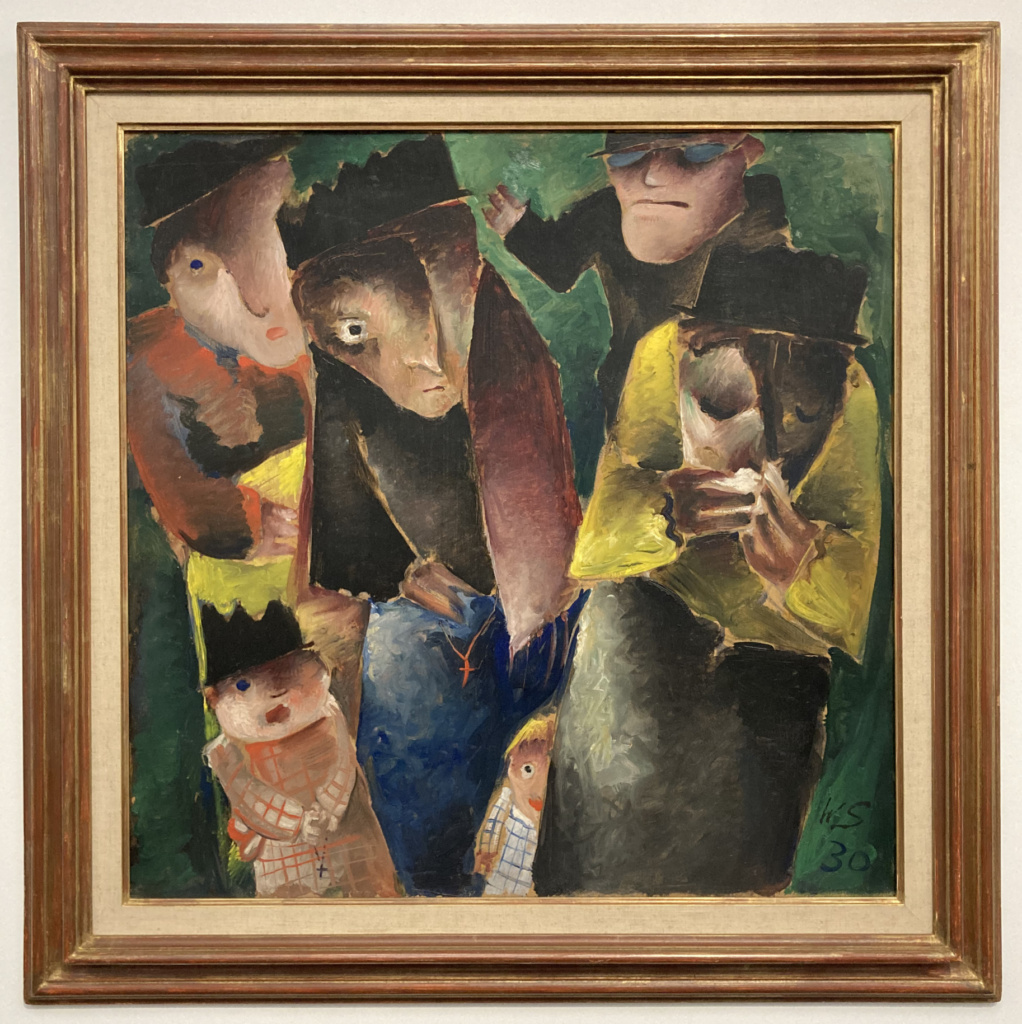
    Werner Scholz. Widwen (Widows), 1931. Oil on hardboard | photo by Frances Livings

    In Scholz’ early paintings from 1927 (the exhibition focusses solely on his works from 1927 to 1937) his figures are cartoon-like marionettes with stiff and angular, wooden movements. Influences from the Dada movement are apparent. Some have animal-like heads, some have puppet faces, are beady-eyed or even one-eyed, and many have pursed lips. He may add an individual prop, an occasional park bench or a café table. But none of them are especially inviting. They add moreover, like his non-specified backgrounds, to a great sense of isolation.

    Specific motifs like desperation, grief, isolation and the imbalance of power start to become apparent in his early works from around 1927 and culminate in the late 1930s.

    These details appear almost bizarre in contrast to the anguish of the actual figures – mostly expressed in the faces and postures of increasingly block-like figures. In the late 1920s and early 30s, Scholz turned to these more picture-filling and compact figures compiled of trapezoids, squares and other angular shapes. These paintings’ backgrounds become very ominous and vague, staging the bizarre and whimsical theatre performances of his figures in barely defined, monochromatic pictorial spaces.

    Although the area around Nollendorfplatz was a flamboyant entertainment hub, it was where, on the other side of the coin, its residents and frequent visitors witnessed the so-called “Terroraktionen” of the up-and-rising National socialists. Even before the Nazis seized power in 1933, Berlin, like Munich, was a fierce political arena and on numerous occasions, the SA provoked violent street battles, in which its members tried to shatter its opponents: members of the Socialist Workers’ Party. Many other insidious tactics were utilised to cause uproar and panic in public spaces, like on Friday, December 5, 1930, at a movie première:

    Also located on Nollendorfplatz, opposite the other large cinema UFA-Palast, was the Mozartsaal cinema, built in 1905/6, and now called Metropolis. That said Friday in 1930, members of the SA released white mice into the audience. Screaming women caused the film to be interrupted while the SA men roared with laughter. Goebbels himself was sitting in the audience. Two days before the “event”, on December 3, 1930, he had briefly noted in his diary:

    On Friday, we’ll be attending the film “Im Westen nichts Neues” (All Quiet on the Western Front) – to teach those eunuchs some manners. I’m looking forward to it.

    – Joseph Goebbels (NS-Propaganda Minister), 1930

    The film was based on the novel by Erich Maria Remarque, a German veteran of World War I, and first published in November and December 1928 in the German newspaper Vossische Zeitung, a nationally known Berlin newspaper that represented the interests of the liberal middle class. In late January 1929, it was then published in book form, which sold 2.5 million copies in 22 languages in its first 18 months in print. It describes the German soldiers’ extreme physical and mental trauma during the war as well as the detachment from civilian life felt by many upon returning home from the war.

    As an intuitive and sensitive observer, like many artists, Scholz was not only a witness of these terrorising propaganda activities but was well aware of the dangers that were looming on the horizon, especially for the already impoverished working-class population and noted himself, only a month later, on Saturday, January 17, 1931, in his journal:

    Yes, it is high time to oppose the furious destruction of culture by the Nazis… The atrocities that the fascists are already able to commit legally must, in their irresponsibility, be pointed out to the entire general public. And … hammer into people’s brains again and again what will happen when this dangerous faction gains power.

    – Werner Scholz, 1931

    On May 10, 1933, at the initiative of Goebbels, Remarque’s writing was publicly declared as “unpatriotic” and banned in Germany. Copies were removed from all libraries and restricted from being sold or published anywhere in the country.

    But not only the portrayal of these harrowing experiences in books and movies but the scarred and injured participants themselves were constant reminders, especially the expansion-hungry National socialists (embedded most obviously in the term the term “Third Reich”) were eager to negate. In the years following the First World War, men who had obvious and often most debilitating war wounds found themselves shunned by a society that no longer wished for visual reminders of the conflict. But artists, with a mixture of sometimes even cruel realism, expressiveness and empathy, such as Scholz, like Dix or Grosz, turned towards them.

    “Brutality! Clarity that hurts! There’s enough music to fall asleep to! … Paint as fast as you can! … capture time as it races by…”

    – George Grosz


    Werner Scholz’s Protagonists: Those Left Behind

    Werner Scholz. Trauernde (Mourners), 1930.

    Many of Scholz’s contemporaries captured the decadence and hedonism of the Weimar Republic. Scholz’s work however, reflected the profound suffering and disillusionment of the era. After the horrors of his own war-experiences he turned pacifist and communist and devoted himself to the petty bourgeois, the underworld and the Berlin demimonde: People in mourning, the destitute, those fleeing and those left behind are his protagonists – dignified figures with a haunting presence*. These are the very qualities that the  German art critic Kurt Kusenberg (1904–1983) also recognised in Scholz’s figurative works of that period, writing in 1932:

    Scholz is essential because he (…) addresses the issues of our time and takes formal risks and presents issues of our time that concern us all.   

    – Kurt Kusenberg (art critic), 1932

    ‌This sensitivity to the social and political climate around him was evident not only in Werner Scholz’ portrayal of human figures but also in his landscapes, like “Novembersonne,” which evoked the very same palpable sense of melancholy and foreboding. His art became a mirror of the collective angst and turmoil experienced by those who lived through the tumultuous interwar period.

    “Novembersonne” was a reminder, how art has the power to transcend time and evoke emotions that are universally human. The painting’s stark, almost oppressive atmosphere, with its dark, bare trees and a sun that barely manages to pierce the gloom, seemed to resonate deeply with the current state of the world. It symbolised the phenomenon that while circumstances may change, the fundamental human experiences of grief, fear, and longing for connection remain constant. Scholz had the courage to put his finger on the wounds, to express these feelings, which was exactly what I was facing.

    * * *

    Serendipitously, after being under private ownership, the painting “Novembersonne” also sold in the month of November. The estimate for lot no. 47 at the auctioneers Van Ham in Cologne, was set at € 5.000 but was it was sold on 30.11.2022 for € 31.680 incl. taxes.

    *

    “Das Gewicht der Zeit”, the exquisite exhibition showing paintings by Werner Scholz, closed in June 2024. But if you are interested in my art tours then stay informed by subscribing to my email list – see above – or check out these dates and buy tickets here:

    Book online

    _______________________________________________

    *Karsten Müller (ed.) Exhibition Catalogue: Werner Scholz. 2024, p. 62 (sold out)

    Uwe Klußmann. 2012. “Conquering the Capital: The Ruthless Rise of the Nazis in Berlin.” from Spiegel.de. DER SPIEGEL. November 29, 2012.

    Christian Schad. 1997. “URBANE DECADENT.” The New Yorker. The New Yorker. September 22, 1997.

    Livings in Los Angeles – Murals and Mug Shots. Thoughts on the Artist Mike Kelley


    Art saved my life. Art was the place that made me want to educate myself. When I became an artist, it was where the most interesting thinkers were.

    —Mike Kelley

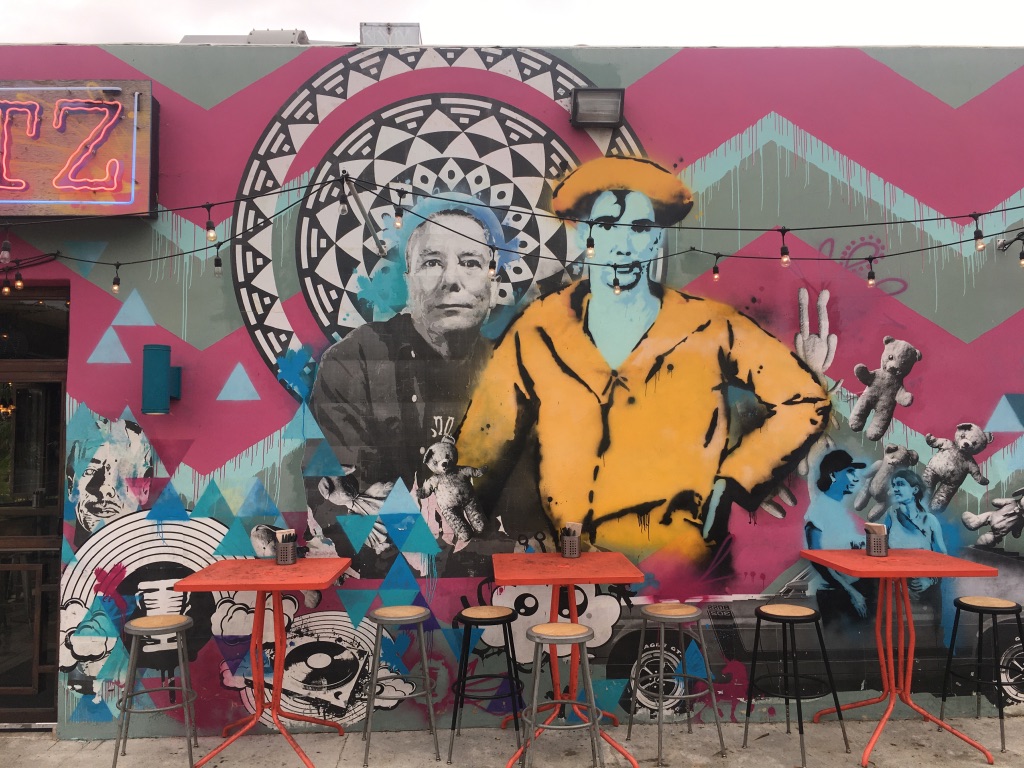
    I seem to encounter certain artists’ works at sometimes random but also symbolic moments, like that of the contemporary American artist Mike Kelley. This afternoon I was strolling down Hillhurst Avenue in Los Feliz, and virtually bumped into a large mural depicting him. I immediately recognized his face and stood there for a couple of moments to take in the large double portrait, the zig-zag patterns, the black and white areole, bright colours, and flying teddy bears. I thought back to when I had first seen his work, which hadn’t been in L.A. It was years ago, on one of my outings to the Galerie der Gegenwart (gallery of contemporary art) in Hamburg, Germany.

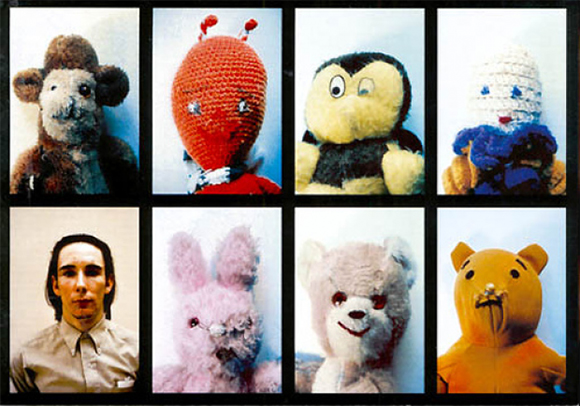
    I had leisurely walked into one of the large gallery spaces and found myself transfixed by eight very unusual portrait photographs. Individually depicted were seven cuddly toys. Their stitched-on fabric or glass button eyes, some lopsided or missing, were staring at me with such resolve as if most desperately wanting to capture my attention. The eighth photograph is of a stern-looking young man with slicked back black hair, who I assumed, is the artist himself. The portraits are all displayed in a very simple frame and hung as a group in two rows of four. Despite the cool ambiance of an art gallery, and the innocence of the objects, they look like mug shots.

    But wait, mug shots of an adult and children’s toys?

    That was in the mid-nineties. I was a junior student of art history and discovered Mike Kelley’s artwork for the first time. It had immediately clicked. I didn’t know anything about his background, but I couldn’t help thinking about these strange mug shots from time to time. Maybe because they had also already found their way into music culture after Kelley created the artwork for Sonic Youth’s 1992 album Dirty, using Ant-Man’s “portrait” on the album cover.

    Kelley was very connected to the LA art scene, which saw, starting in the 1990’s a very palpable period of growth and resurgence. He had initially studied under teachers like John Baldessari and Laurie Anderson at CalArts, where he earned a Master of Fine Arts. In addition to being a renowned visual artist, Kelley was also a musician, and before going to CalArts, a founding member of the proto-punk Detroit band Destroy All Monsters, who earned a cult following with their experimental performance art. Writing in The New York Times, in 2012, Holland Cotter described the artist as “one of the most influential American artists of the past quarter century and a pungent commentator on American class, popular culture and youthful rebellion.”

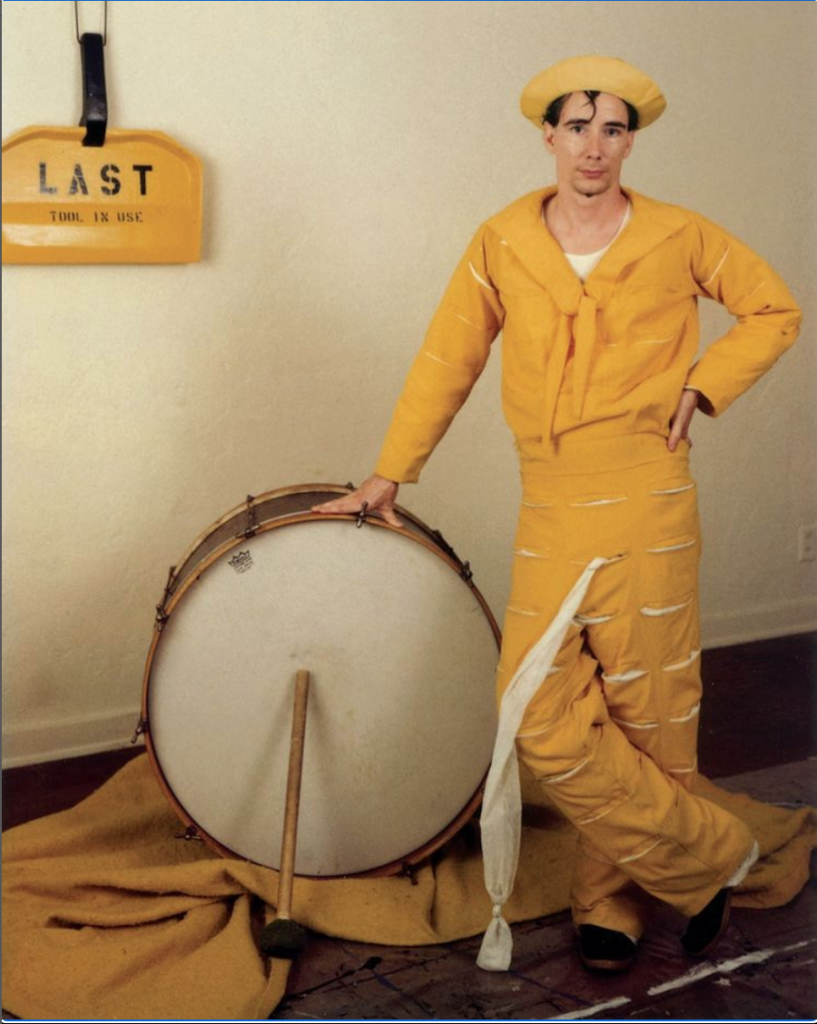
    The following photograph must have served as a template for the mural above. It depicts Mike Kelley as The Banana Man: Written in 1981 and shot in 1982 while Kelley was teaching a performance/installation class at the Minneapolis College of Art and Design,1 The Banana Man was his first completed video work.

    "Portrait


    Stuffed Toys, Wax Candles, Afghans and Dried Corn

    I had my second very intense encounter with Kelley almost two decades later. I had been living in Los Angeles for about six years and on one fairly uneventful, sunny morning, I was flicking through the L.A. Times when I read, that he had committed suicide. I was shocked in the way I often am when I’ve been assuming that life just flows along, that others will somehow always be around. He was only 57 and had by then established himself as an internationally renowned artist.

    I dug a little deeper online, and read in further articles that only around four hours after confirmation of his death, an unofficial, makeshift memorial had started to appear in an abandoned carport at the top of Tipton Way, a few blocks from Kelley’s home in the Farley Building in Highland Park. Built from stuffed toys, wax candles, Afghans, and dried corn, mourners began replicating Kelley’s More Love Hours and Wages of Sin. These were two paired installations he had exhibited in The Whitney’s 1989 Biennial. I also learned that The Mike Kelley Foundation was organizing a memorial that was to be held at his studio in Eagle Rock/Highland Park on February 25, 2012.

    I spontaneously decided to go. So on one of these for Los Angeles, typical mild February evenings, I drove through dimly lit streets to Kelley’s former residence. I parked on a side street lined with old gnarly oak trees, spiked with well-kept 19th-century craftsman bungalows, typical for South Pasadena. Like many pockets of Los Angeles, it felt very insular and isolating. I walked up to the main road towards the building in which the memorial was taking place. Its concrete steps led up to a very triste-looking entrance where a handful of people stood, collectively nodding as if to acknowledge my arrival. I felt a slight wave of guilt wash over me for being curious in a weirdly voyeuristic way. I had never met this man and yet I was showing up at a memorial – like a grief tourist? But I was curious. Who was this artist really? What was his provocative art really about?

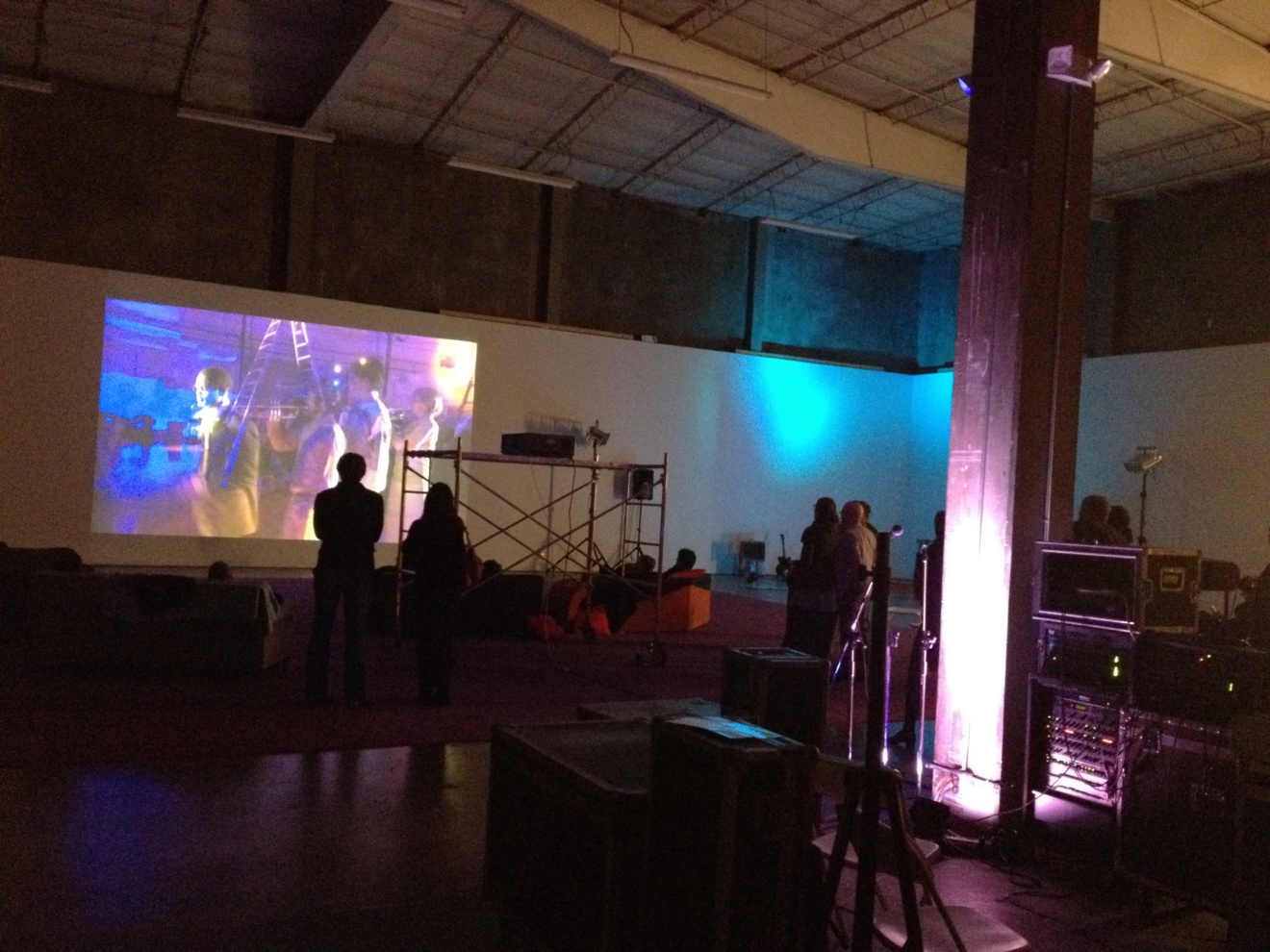
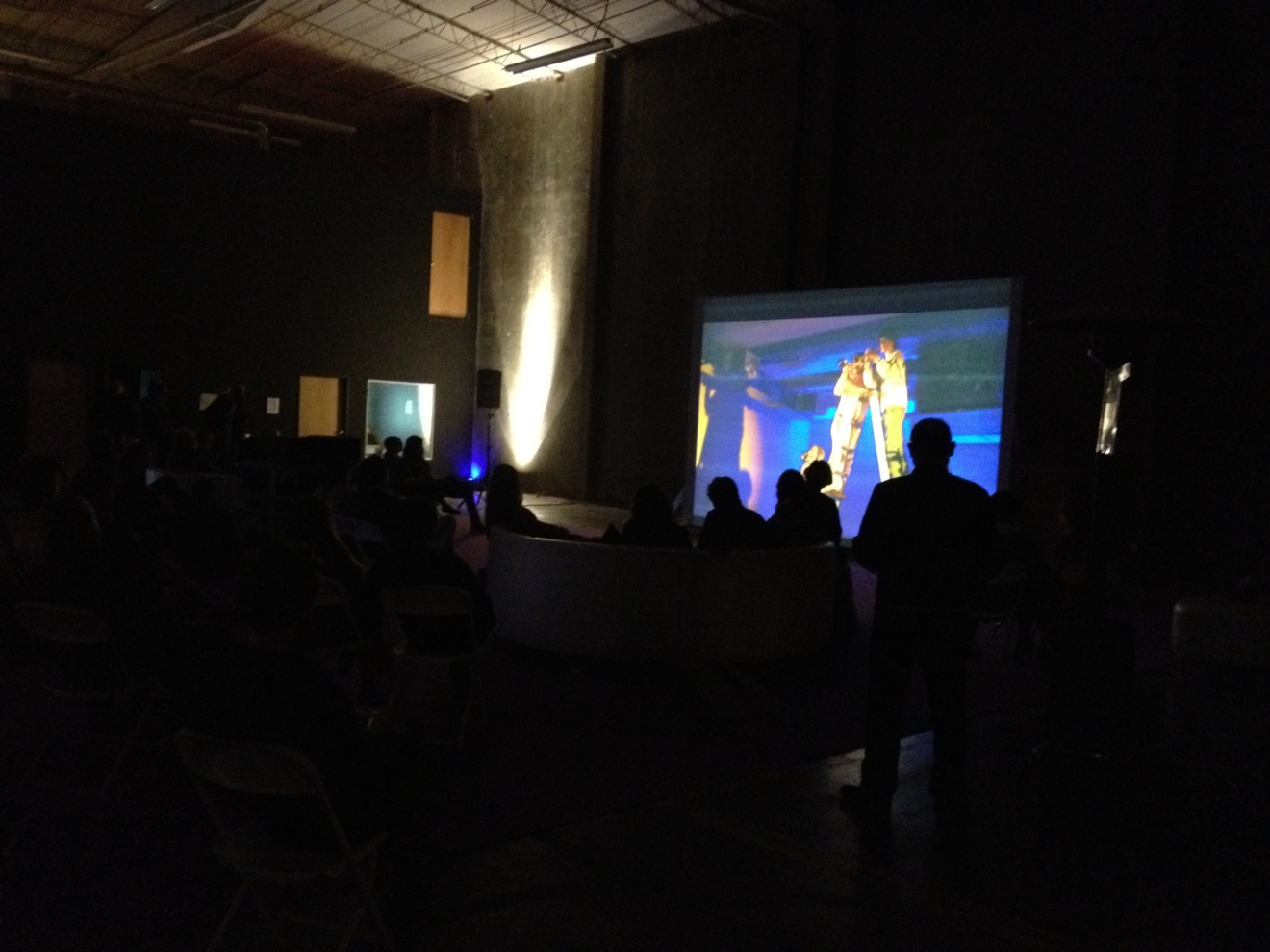
    Like approximately another 100 people, I wandered around through this vast space, which had been, only days prior to his death, his studio. Plastic cup in hand, filled with cheap red wine, exploring a maze of small administrative-looking side-rooms, watching sometimes only for a few minutes films Kelley had created. The main space, his studio, where more art installations were displayed and further screenings took place, reminded me of a large airplane hangar [see more pictures below]. It was a solemn and strange event but I was glad to be able to participate in something…


    Ant-Man, Teddy, Rabbit and – Mike Kelley…

    Two years after his death, in 2014, the largest ever retrospective of Kelley’s work was shown at L.A.’s Geffen Contemporary, part of the Museum of Contemporary Art (Moca). An extensive catalog on Kelley was also published by Prestel. I was able to take a closer look at much more of his impressive oeuvre, including the Ant-Man, Teddy, and Rabbit ensemble, which was also on display.

    What really struck me this time was the way they are sitting there: stiff and unhappy-looking, tatty creatures propped up to have their photograph taken. Their fur coat or croquet suit is dirty, worn, and faded, limbs are limp, and they sport a blank stare, exposed by the bright flash of a camera. They seem like visual proof, tokens of having been thrown, kicked, punched, spat, cried, and vomited upon – so ultimately the epitome of abuse and trauma. But were Ant-Man, Teddy and Rabbit really just physical witnesses to something horrible that was inflicted upon them? It is apparent that they are more there to tell a more complicated story.

    Because on the other hand, these individual portraits still appeared to me like a collection of mug shots: seemingly innocent cuddly toys depicted as perpetrators on the stand in an almost accusatory manner. From that perspective they seemed to suddenly stand for shame and guilt – but how could stuffed animals be guilty of anything? Their images are physically enclosed, separate from each other, and kept in tyrannical order by a strict, linear picture frame – did they stand for something that was kept secret within the walls of a children’s nursery? But why were they augmented or maybe even contrasted by a further mug shot: one of a grim-looking male adult? Was he depicted as the abuser, with dark circles under his eyes, in a buttoned-up beige dress shirt? Or a prison guard?


    That’s exactly what made Mike Kelley’s artwork so memorable, all of these questions and discrepancies…

    There was more artwork on display in the exhibition including soft toys and I realized, how tempting it was to read soft toys as relics of an innocent and happy childhood. Moreover, to view in general, in society, nurseries as safe spaces. Childhoods are happy and parents loving – or not? But this is the very reason why so many moral conflicts occur when these ideas are challenged: Any notion that disrupts these stereotypes and clichés is easier being denied, which is why at that point in my life, just intuitively, I found his work compelling and courageous. Ultimately, for the very reason, parental abuse is so crazy-making.

    Looking at his body of work, one may interpret his works of art, like those described above, as a result of trauma, translated into the many often disturbing, but clever images he produced. But this wasn’t what I was interested in asking. I didn’t need to know whether this ensemble of tatty, abused-looking creatures gave the observer biographical information about the artist. Nor was I really interested in speculating about why precisely he killed himself. The topics were evident. That was enough.

    Standing there this afternoon, on a hot afternoon in September 2022, taking pictures of the mural, I realized that since his death in 2012, a whole decade had gone by. The mural also made it apparent that an artist (I have yet to find out who it is) revered Kelley enough to create a large double portrait on a prominent street corner. But also, that not only Kelley was deeply ingrained in the city’s cultural fabric but I was too. I had memories, whether of a painful or a joyful nature, which connected me socially, geographically, and emotionally to this schizophrenic city.

    I suddenly realized why I had felt so compelled to attend his make-shift memorial in 2012.

    I had felt on that strange, dimly-lit evening of his impromptu memorial that he deserved my tribute because I admired his courage to touch upon subjects that are still – decades later – socially somewhat taboo and sadly, therefore, for many unresolved. As children, we rarely have an ally when being abused or mistreated, ignored, or neglected by a parent. Moreover, until we heal we only too often put ourselves on the stand and take mug shots of ourselves – since, for any child, the reality of having an abusive parent is too painful and can threaten basic survival needs. Mike Kelley epitomized these complicated and highly problematic emotions.

    Scenes of Mike Kelley's Studio during memorial 2012

    Still Lifes ~ The Art of Tranquillity


    Still lifes – the art of tranquility… It was just one of these mornings. Lying there in bed, I felt as if my life was washing over me like a big grey wave. The murky waters were draining off, revealing a bit of useless debris. My music and my writing appeared like mere fragments. Projects scattered everywhere; unfinished poems, unsold CDs, unwritten essays. And ideas were just flying around in my head like annoying flies. There were no neat stacks of achievements piled up like thick, leather-bound books with gilded letters spelling out the phrase, “a successful career”. There was no linear path steadily leading up to a golden throne – let alone a camping stool – on which I could rest and observe my “kingdom”: a well-sorted archive full of publications and releases, awards, and chronologically ordered press clippings.

    I felt messy, insecure, depressed, a bit lonely but most of all irrelevant.

    I was spending a few days in solitude at my mother’s house in the countryside. The peacefulness was very soothing but my mind can be overactive and therefore stressful at times. It was still early, so I went for a run, which always makes me feel better. Taking in the soft, luscious countryside bursting with green buds and concentrating on my repetitive breathing soothed me. Back home I had more espresso with hot milk, some toast with honey, and promised myself to write for an hour before going on a little Sunday outing to the local art museum.

    I drove into the village and parked the car just far enough away to enjoy a brief walk up the cobble-stoned street. The weather was beautiful; there was a light breeze, an abundance of fresh air and the sun was warming some wind-shaded spots. Cheerful little puffy white clouds hurried along a light blue sky that created a nice backdrop to the red brick of the expressionistic buildings and the dark green of the fir trees.


    Out of my Head: Into the Museum

    I entered the museum and my first cursory glance caught some paintings I automatically expected to be 17th-century Dutch church interiors. Upon entering the exhibition, however, I was astounded to see that these pictures, a few more interiors but mostly still lifes, dated from around 1968 to 2009. They were by a contemporary Dutch painter Henk Helmantel and the exhibition was to commemorate his 70th birthday.

    Helmantel-Roman-glass-still-ilfe


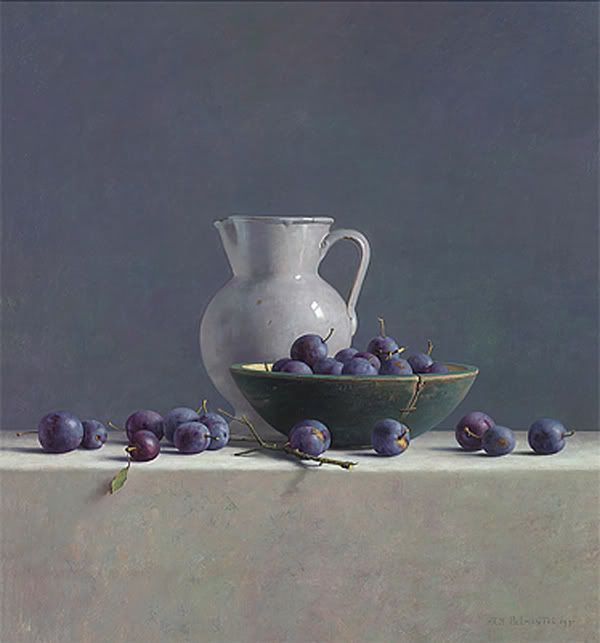
    What struck me wandering around, was how tranquil, focussed, and simple most of the pictures were. They were mostly fairly large in format. As a viewer, I had the feeling that the artist was consciously showing these objects to me, rather than permitting an intimate view of something otherwise quite private. These works were, therefore, less intimate than their much earlier Dutch predecessors. But the choice of objects depicted was very similar. They were all simple household items, bits of fruit and vegetables, mostly locally grown like asparagus or chestnuts. There were simple boxes, bowls, and glass vases, some antique, but displayed in a consciously chosen space, in a balanced and symmetrical way, and whose clear and clean lines reminded me of Danish art that emerged around the beginning of the 19th century.

    IMG_7185

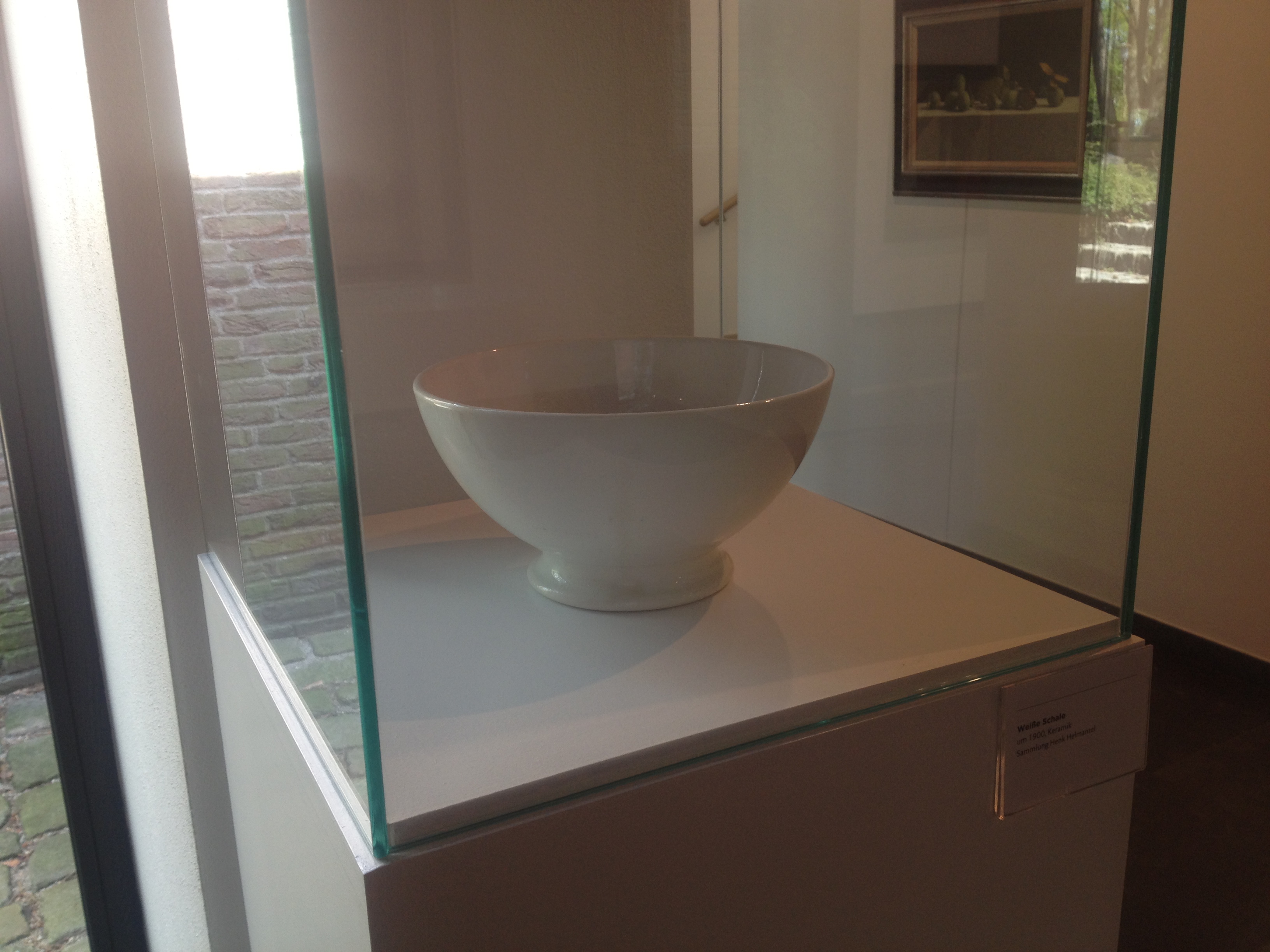
    Many items depicted stemmed from the artist’s collection. But there was no highly precious or prestigious aura surrounding them. There were no exotic features or valuable items. Their value was based upon, so it seemed, on shape and colour, or their proportions. A bowl on a narrow rim, with an even cream glaze, which Helmantel had painted holding nine eggs (see above) was displayed in a glass showcase that accentuated its simplicity and serenity.

    IMG_7187

    The Artist Henk Helmantel

    Born in 1945 in Westeremden in Holland, which lies North of Groningen, Helmantel was raised as one of five children. His parents owned a nursery and the children helped sell their plants and flowers at the traditional local markets, like in Groningen. The story goes that on one of these trips Helmantel made his very first visits to a museum and was overly impressed by Rembrandt. From then on he collected any snippets and pictures from newspapers and magazines he could find. He was determined to become a painter, later attending the art academy in Groningen.

    It became obvious to me that he was a diligent and meticulous worker, dedicated to depicting these serene objects in the most naturalistic way possible. He was obviously interested in the unique surfaces of the objects, like in the irregular iridescent glass of his collection of Roman vessels (see picture above). But at the same time, he wasn’t taking any liberties by letting a single brush stroke stand out or have an expressionistic or impressionistic character, let alone by being textural. Each stroke serves the depiction of the object in the most naturalistic and realistic way possible.


    Still Lifes and the Art of Tranquility

    Personally, I love texture and abstraction in painting. I only recently saw a quite impressive exhibition of William Turner‘s work at the Getty Museum in Los Angeles. But that afternoon, it was the clarity and focus in Helmantel’s paintings that inspired me. Even his more involved paintings are evenly and thoughtfully grouped objects. There are no coincidences. Everything is consciously arranged, which also means that each object is taken seriously within its own unique value. I told myself:

    Take every piece, each poem you write, every song you sing seriously, take it for what it is!

    I could feel the jumble in my head and the doubtfulness that tortures every artist more or less frequently being soothed. I kept thinking,

    Stick to what you do, and do it with dedication, clarity, and consciousness! Or like the French author and philosopher Albert Camus said:
    “Find meaning. Distinguish melancholy from sadness. Go out for a walk. It doesn’t have to be a romantic walk in the park, spring at its most spectacular moment, flowers and smells and outstanding poetical imagery smoothly transferring you into another world. It doesn’t have to be a walk during which you’ll have multiple life epiphanies and discover meanings no other brain ever managed to encounter. Do not be afraid of spending quality time by yourself. Find meaning or don’t find meaning but ‘steal’ some time and give it freely and exclusively to your own self. Opt for privacy and solitude. That doesn’t make you antisocial or cause you to reject the rest of the world. But you need to breathe. And you need to be.”
    — Albert Camus (Notebooks 1951-1959)


    Simplify and focus!


    Henk Helmantel

    IMG_7198

    IMG_7191
    All paintings above by Helmantel

    IMG_7188

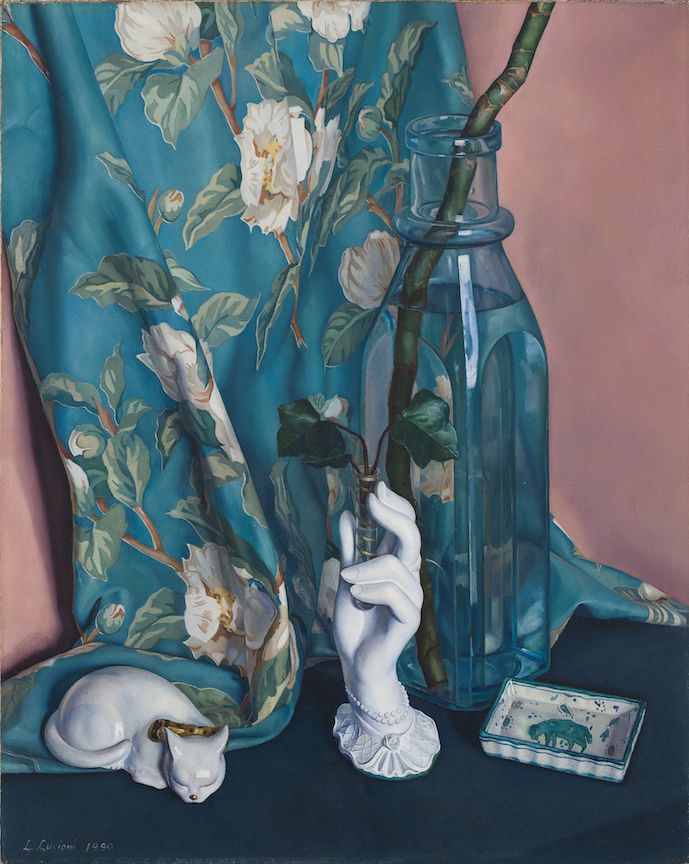
    Luigi Lucioni, Arrangement in Blue and White, 1940. DC Moore Gallery, New York NY USA


    (c) Frances Livings, 2015


    Here’s a playlist for a more uplifting mood:

    Did you like this post? If so, why not…

    Creative Influences ~ Sneezles by A. A. Milne on Record-A-Poem

    When a couple of weeks ago, I was asked to pick a children’s piece to record as a segment for a voice-over demo, a cute little poem came to mind – something with sneezing. Via Dr. Google it was quickly retrieved on the internet. Here are the first lines:

    Christopher Robinsneezles_1
    Had wheezles
    And sneezles,
    They bundled him
    Into
    His bed.
    They gave him what goes
    With a cold in the nose,
    And some more for a cold
    In the head…

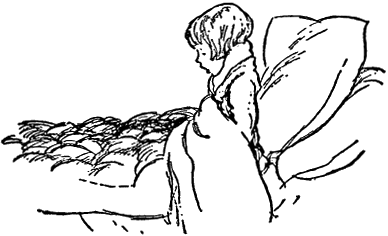
    Sneezles is from The Complete Poems of Winnie-the-Pooh. It is such a quirky, melodically rhyming get-well-soon poem by the English author and poet A. A. Milne. The poem captures some of the advantages of being a sick child, which is (for some) being the center of attention. Especially the last line is in that sense very amusing. You can listen to my reading of the poem down below.

    Milne was best known for his books about the teddy bear Winnie-the-Pooh and for various other children’s poems. He wrote Sneezles as a children’s poem for and about his son, Christopher Robin Milne, whose name – abbreviated to Christopher Robin – was the basis for the character in all of the Pooh books and poems. The character Winnie-the-Pooh was named after a teddy bear owned by Christopher, whose toys actually lent their names to most of the other characters in the Pooh books, except for Owl and Rabbit.

    Above is an illustration for Sneezles by E. H. Shepard, the English artist and book illustrator who coined the appearances of all of Milne’s characters and which were equally popular to Milne’s writings.

    EH Shepard's ink drawing of Winnie the Pooh playing Poohsticks with Piglet and Christopher Robin.
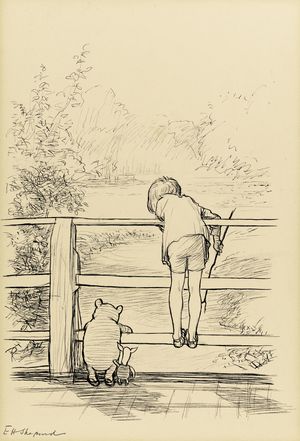
    E. H. Shepard, ink drawing of Winnie the Pooh playing Poohsticks with Piglet and Christopher Robin. Photo: AFP / SOTHEBY’S LONDON

    One of E. H. Shephard’s most famous images of Winnie the Pooh actually just sold for £314,500 at auction, at three times its estimate. It formed part of Sotheby’s sale of children’s books: An ink drawing of the bear playing Poohsticks with Piglet and Christopher Robin, published in 1928. The illustration was featured in A. A. Milne’s second book, The House At Pooh Corner, and had been in a private collection since the 1970s.

    All of Shephard’s illustrations are very quiet and intimate. They depict scenes of introverted characters, ones that are thoughtful and philosophical. They reflect the subtlety of Milne’s writings, which are amongst adults as quotes still hugely popular. One of my personal favourites is:

    People who don’t think probably don’t have brains; rather, they have grey fluff that’s blown into their heads by mistake. ― Winnie the Pooh

    Sadly, Disney adapted the Pooh stories into a series of features that became one of its most successful franchises. I personally, like these ink drawings so much better than the popularized Disney animations which have turned the airy, vulnerable and whimsically sketched characters into teletub-like, plump and one-dimentional, in-your-face characters. It actually pains me to think that some children will never get to see the original drawings.

    Not that these works per se lack popularity; there’s even a annual National Awareness (or bearness?) Day for Winnie the Pooh, which was two days ago, on January 18.

    So far, I haven’t gotten any work out of the demo so instead of letting it dwindle into forgottenness, I sent the recording to Record-A-Poem a poetry group initiated by the Poetry Foundation. Their poetry blog Harriet has been inviting people to post audio recordings of their favourite poems on their Soundcloud stream. The Poetry Foundation, the publisher of Poetry magazine, defines itself as “an independent literary organization committed to a vigorous presence for poetry in our culture. It exists to discover and celebrate the best poetry and to place it before the largest possible audience.”

    Happily, my reading of Sneezles was added to their collection and can now be heard in their Soundcloud stream and through the widget posted below.


    National Poetry Month, April 2014

    ALPHABET-letterpress-wood-printing-blocks-wooden-letters-font-type-letterformsFlyingBookPages

    Rapid technological development has led to a constant flood of visual and acoustic bits and bites – emails, text messages and Facebook updates. For most of us it has become a habit to react, one that often leaves us frazzled and detached. Single-tasking has become a luxury in the 21st century. To sit down and simply read a poem, so to only focus on one individual piece of work, can feel as if we’re not doing enough, or even wasting time. Besides, especially poetry can seem very inaccessible. It is not easily consumed; it does not offer clear-cut outlines, neat bullet points or answers to your most urgent questions in life. Poetry demands from both the writer and reader attentiveness and reflection, moreover, intellectual and emotional engagement.

    I am writing this on April the 2nd, two days into National Poetry Month 2014. First launched in 1996 with the support of the Academy of American Poets, the month of April was declared National Poetry Month.[1] Some literati like to argue that the celebration of poetry should be a daily and not an annual event confined to a month. But this is not the discussion I want to engage in at this point. I am taking this event as an opportunity to reflect upon the role poetry can play in our lives.

    Anyone who engages in poetry – or in any kind of art form – is most likely both curious and highly sensitive. Our attention is usually not drawn towards the general or the spectacular but towards the singular, with its nuances and notions, shadows and shades. Those of us who write poetry must often follow the invisible; we hunt after illusions, traces, and wisps of things. With the patience of field archaeologists we excavate vague impressions we are sometimes barely able to grasp, often agonizing over every word and phrase. Our reward is when this „tantalizing vagueness“, like Robert Frost called it, takes on forms and meanings that lie beyond our expectations, like hidden little gems waiting to be uncovered.[2] Aristotle wrote of poetry as, „a kind of thing that might be“, in contrast to history as something that was.[3]

    Both reading and writing poetry demands of us opposing virtues; we have to be both intuitive and logical, heart and head strong, playful and disciplined. Poetry teaches us an awareness of the wonders of the world, of mankind and of language. Through poetry we take in others, their universe, their views, anxieties, beliefs and emotions – snapshots which can even mirror our own.

    Poetry „cannot reduce life, with all its pain, horror, suffering and ecstasy, to a unified tonality of boredom or complaint“[4]. Poetry facilitates reflection and compassion. It connects us not only with others but also to ourselves. My maternal grandmother suffered from Alzheimer’s disease. It was painful so see how every day she seemed to be vanishing a little bit more into this inescapable thick fog, like a ship with once billowing sails, now deflated and torn, lost at sea. But even when she couldn’t recognize most family members anymore, she could still recite poems from her youth. The poetry she loved and had mostly learned by heart still enabled contact with her own identity, with herself.

    National-Poetry-Month-April-2014-poster-design-chip-kidd

    Twitter-page-Poets-Academy-of-American-Poets.org

    National-Poetry-Month-2014-official-poster-poetry-quote


    [1] The Russian poet Joseph Brodsky, who with the help of W. H. Auden was living in American exile, had declaimed that poetry should be available everywhere. In 1993 together with the student Andrew Carroll he founded the non-profit organization American Poetry and Literacy (APL). Three years later the movement was flourishing and over 125,000 books of poetry had been distributed for free.

    [2] See my blog post “The Pomegranate – On Finding Poetry“.

    [3] “The distinction between historian and poet is not in the one writing prose and the other verse… the one describes the thing that has been, and the other a kind of thing that might be. Hence poetry is something more philosophic and of graver import than history, since its statements are of the nature rather of universals, whereas those of history are singulars.”  ~ Aristotle, On Poetics.

    [4] Czeslaw Milosz, A Book Of Luminous Things. An International Anthology of Poetry, San Diego, New York, London 1996, p. XVI.

    Wonderful Review of “The World I Am Livings In”

    The World I am Livings In

    Frances Livings

    Moontraxx Records – MXFL2013-014

    Available from Frances Livings’s Bandcamp page.

    A review written for the Folk & Acoustic Music Exchange
    by Mark S. Tucker
    (progdawg@hotmail.com)

    Following the release of a half-dozen singles and EPs, Frances Livings has published her first long-form CD, The World I am Livings In (clever title!), and her voice is mindful of Martha Velez, Carole King, and Helen Reddy with a bit of Rita Coolidge and Elkie Brooks thrown in, but her milieu is much closer to Lisa Kirchner’s Umbrellas in Mint (here) in that it’s an unusual blend of the cabaretic, folk moderne, surreal (the earthy lyrics in Eating the Darkness alone are on par with Dory Previn), classically oriented jazz, and then that odd twilight world that in recent generations has spelled a whole new landscape of sonic delights I firmly aver presages an onrushing era unlike any antecedents.

    What first really caught my brainworks in the disc was I’ll be Leaving Soon, a dark-ish pensée executed in semi-stream-of-consciousness illuminated by beautifully understated chamber strains (arranged by Livings’ husband Greg Poree) exalting a weary soul encanting verses of departure and hopeful renewal. Think of William Lyall or the Penguin Cafe Orchestra sitting in, but it’s really Livings’ writing that’s entrancing, and she penned almost everything on the CD, then chose some really good sessioneers, including Jeff Colella, whose piano work is a central aural motif, along with several superb strings-raspers.

    More than anything, The World comes across as a half-lit stage presentation for post-Beat hipsters grown weary of all the blare and squall of an overdriven mainstream, looking for literate but unorthodox fare and a chance to once again think while immersing in moody atmospherics. Not coincidentally, then, the smirking satire of comedienne Sara Bernhard finds its way into the mix here and there, beefing up the outside-the-box metier all the more. Poree jumps into the mix again, this time with a well blended guitar, and scenes miasmically shift and flow as the twisting narrative wends its path, but the inclusion of the 1:19Pebbles in my Hand was a piece of brilliance, and I’m damned if I can quite figure out why—though it’s probably the track’s status as a rarely found act of interscript between movements. Ya just can’t locate that in music any more, y’all. In sum, this is actually more a piece of art than it is music, but of an ilk belonging with Carla Bley, Annette Peacock, and of course the aforementioned Kirchner, among others, including Janis Ian at her best; thus, don’t do anything else once you’ve tossed the disc on, or you’ll miss more than you ever guessed was there.

    Track List:

    • Don’t Ask Me If I Miss You
    • When Love Falls Apart (Greg Poree)
    • It Will Never Be the Same
    • I’ll Be Leaving Soon
    • Eating and Darkness
    • Pebbles in My Hand
    • White Angel’s Café
    • True Colors (Steinberg / Kelly)
    • Candy’s Caravan
    • Lonely in the Night
    • Only Time Will Tell
    • Please Close Your Eyes
    All songs written by Frances Livings except as noted.

    Edited by: David N. Pyles
    (dnpyles@acousticmusic.com)

    Copyright 2013, Peterborough Folk Music Society.
    This review may be reprinted with prior permission and attribution.

    Donating = Loving

    Please support the arts! You can purchase my music and spoken word – which I hope you will. If you find joy and inspiration in my words, and would like to provide additional support, please be lovely and consider a donation of your choosing – from anywhere between a coffee and a nice dinner. It will be deeply appreciated.

    The Pomegranate ~ On Finding Poetry


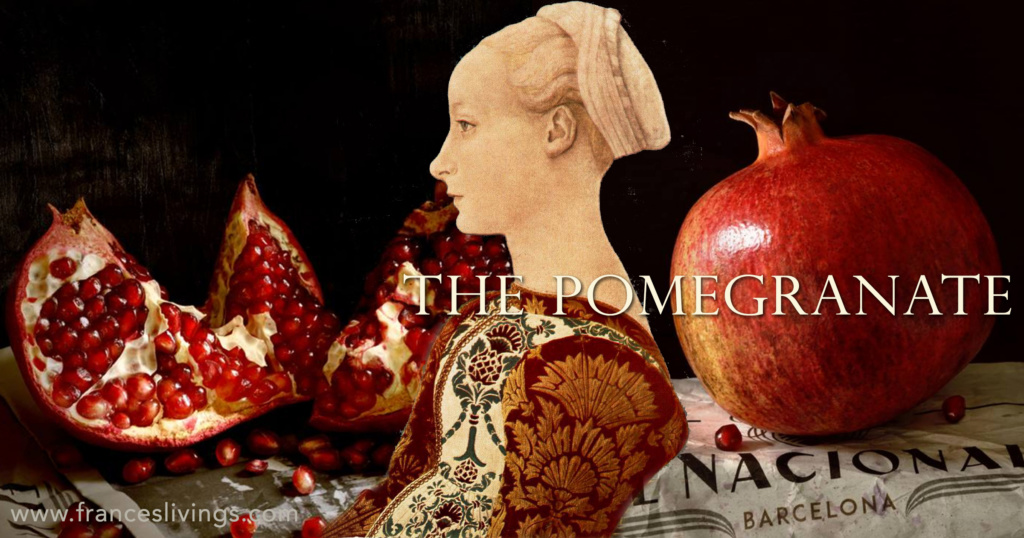
    Pomegranates open and still closed pomegranate seeds costume woman sitting old painting

    Pomegranates are an ancient food, a globular-shaped fruit filled with juicy red seeds inside a hard shell, which appears in the mythologies and artifacts of several ancient Near Eastern cultures. Pomegranates are mentioned at least 25 times in the Old Testament. As a motif, it appears in embroidered form on the ephods of Israeli priests as well as in temple architecture, like in bronze on the pillars of Solomon’s temple. It is regarded as a sensuous fruit and appears in – amongst other poems – the flowery prose of the love poem, The Song of Solomon: “Let us get up early to the vineyard; let us see if the vines flourish, whether the tender grape appear, and the pomegranates bud forth. . .”  (Song of Solomon 7:12)

    Studia Antiqua, The Pomegranate


    In the quiet of a virgin morning, it feels right to sit with feet in warm slippers and a cup of hot steamy coffee in hand, and languidly let memories and fragments of ideas drift through the labyrinths of my brain. These are golden times, namely, when my monkey mind is still asleep – maybe simply exhausted from so much chattering, poking, and teasing. I can experience the same state of mind in the still of the night, when the dogs, like the day, are curled up to little furry donuts, quietly snoring away.

    This is why I find that being in the flow of concentrated and productive writing is a lot like meditation.

    As a musical poet and as a songwriter, I very much favour writing short pieces, like lyrics, poems, or short stories. They allow me to zoom in on very concise experiences or emotions. Anaïs Nin, the French-born novelist, passionate eroticist, and short story writer, who gained international fame with her journals stated: “We write to taste life twice, in the moment and in retrospect”.

    Poetry as an Elevating Medium

    A lot of the time this is true; no matter in which genre. A painter will experience a landscape by looking at it and re-experiencing it through his or her interpretation of it. I would like to add, however, that writing also enables me to experience things I didn’t know had impacted me – any Freudian-oriented analyst will like this statement because it illustrates how much slumbers in the sub-conscience.

    The American Pulitzer Prize-winning poet Philip Levine uses poetry as an elevating medium:

    I believed even then that if I could transform my experience into poetry I would give it the value and dignity it did not begin to possess on its own. I thought too that if I could write about it I could come to understand it; I believed that if I could understand my life—or at least the part my work played in it—I could embrace it with some degree of joy, an element conspicuously missing from my life.

    Foreign Findings like Fallen Fruit…

    Whenever I allow myself the quiet time of reflection, the results are sometimes unexpected: Foreign findings lying there like fallen fruit; ripened, unharvested pomegranates ready to be picked up, weighed in ones hand; their shape, colour, texture inspected, broken open and their inner jewels eventually coaxed into essays, songs or poems. The American poet Robert Frost described his process of writing poetry in a similar way: He said that a poem […] begins as a lump in the throat, a sense of wrong, a homesickness, a loneliness. It is never a thought to begin with. It is at its best when it is a tantalizing vagueness.” This process is what I would like to call finding poetry.

    © Abbey Ryan, Pomegranate in Early Morning Light, 2009
    Abbey Ryan, Pomegranate in Early Morning Light, 2009

    In terms of its reception, the Literature Nobel Prize winner Czeslaw Milosz claims that a poem not only demands this utmost focus from the writer but also from the reader – “reading a poem is, after all, always an exercise in attention” he writes. Alas, these moments are rare. Especially with the omnipresence of social media, the constant flood of mostly irrelevant emails, and endless to-do lists, it is often very difficult to achieve the amount of necessary focus. Without even leaving our workspace we become the distracted virtual flâneur, scrambling and scrolling through endless pages, filling our minds with digital clutter.

    But secretly, we all know that often these emails, messages, pages, and social media sites offer a convenient escape from the tormenting, growing pains of a piece and to some extent, much-needed social contact. Because it is definitely not a myth that writing is a very lonely and sometimes frustrating process. Often, towards the afternoon my head often starts to resemble a scrap yard filled with piles of debris of the day – admittedly to some extent self-inflicted.

    Most writers write because they have to write. But it takes courage to follow your own musings, to hope for the pomegranate in meditation. Discipline to sit through the editing process is another necessity. This is why the American writer Ernest Hemingway recommends bluntly: “Write drunk and edit sober”.

    I have always written, but in the beginning, when I started dedicating more and more time and energy to my personal writing I would ask myself in dark moments, which purpose did it really serve? My education was in academic writing which always gave me something exterior to focus on and therefore to hold on to – whether it was a painting or a building. These were functional pieces of academic writing, which served exhibition catalogues or guided tours. But starring at a pomegranate doesn’t always feel like the most useful, economically wise, socially valuable, or practical thing to do. This is why dedicating oneself to these seemingly superfluous musings can be scary for multiple reasons.

    What happens when we surrender to these doubts of “usefulness” and abandon these creative musings? The Novelist Hubert Selby Jr. writes in his foreword to Requiem for a Dream “Certainly not everyone will experience this torment but enough do and have no idea what is wrong.” Furthermore, he asks:

    What happens if I turn my back on my Vision and spend my time and my energy getting the stuff of the American Dream? I become agitated, uncomfortable in my own skin, because the guilt of abandoning my Self/self, of deserting my Vision, forces me to apologize for my existence, to need to prove myself by approaching life as if it’s a competition. I have to keep getting stuff in an attempt to appease and satisfy that vague sense of discontent that worms its way through me.

    It takes courage to be an artist. According to the 19th-century German philosopher Arthur Schopenhauer, artists, “are committed to a completely ‘unpractical’ activity.” Czeslaw Milosz writes: “Among works of painting, Schopenhauer assigned the highest place to Dutch still-life […] they present to him the peaceful, still frame of mind of the artists, free from will, which was needed to contemplate such insignificant things so objectively, to observe them so attentively, and to repeat this perception so intelligently.”

    Art is mostly free of purpose when it comes directly from the heart. This is basically what the French expression ‘l’art pour l’art‘ means. It expresses a philosophy that the intrinsic value of art, and the only “true” art, is divorced from any didactic, moral, or utilitarian function. So to dedicate time and energy to my musical poetry or to a whole solo album with my own song material meant to dedicate time to myself. To see and describe my interior as the “painting” or a building and to deeply examine these constructions of thoughts and emotions – was to take myself seriously, my inner truth.

    Frances Livings © 2013

    Pomegranate seed
    Vladislav Loktev | Saatchi Art Slovakia

    How to Cut a Pomegranate by Imtiaz Dharker

    I wanted to share this poem by another writer, Imtiaz Dharker, because it so beautifully illustrates why historically many cultures have been enamoured by this fruit. Pomegranates are texturally quite wondrous when broken open because of their contrasting insides and outside. They have juicy, jewel-like, and very vulnerable seeds inside a hard and protective husk. The piece also has many references to its long and lasting cultural history and symbolism, like fertility. Imtiaz Dharker is a Pakistan-born British poet, artist and documentary filmmaker. She has won the Queen’s Gold Medal for her English poetry. Dharker was born in Lahore, Punjab, Pakistan to Pakistani parents.

    ‘Never,’ said my father,
    ‘Never cut a pomegranate
    through the heart. It will weep blood.
    Treat it delicately, with respect.

    Just slit the upper skin across four quarters.
    This is a magic fruit,
    so when you split it open, be prepared
    for the jewels of the world to tumble out,
    more precious than garnets,
    more lustrous than rubies,
    lit as if from inside.
    Each jewel contains a living seed.
    Separate one crystal.
    Hold it up to catch the light.
    Inside is a whole universe.
    No common jewel can give you this.’

    Afterwards, I tried to make necklaces
    of pomegranate seeds.
    The juice spurted out, bright crimson,
    and stained my fingers, then my mouth.

    I didn’t mind. The juice tasted of gardens
    I had never seen, voluptuous
    with myrtle, lemon, jasmine,
    and alive with parrots’ wings.

    The pomegranate reminded me
    that somewhere I had another home.


    Simply Mesmerising…

    The Color of Pomegranates from 1969, is a visually extremely mystical and stimulating film, sometimes shown at art-inspired cinematic events and museums. Originally known as Sayat-Nova, this Soviet Armenian avant-garde film and was written and directed by Sergei Parajanov as a poetic treatment of the life of 18th-century Armenian poet and troubadour Sayat-Nova. Parajanov takes an unconventional approach to storytelling: Rather than adhering to a traditional narrative structure, he opts for a series of carefully composed tableaux vivants to capture the essence of the poet Sayat-Nova’s life and creations. These tableaux explore, in a symbolic manner, art, culture, and spirituality. [see Wiki] The film is regarded as a landmark in cinema history, and was met with widespread acclaim among filmmakers and critics. It is often considered one of the greatest films ever made.


    © Henk Helmantel, Stilllebenkomposition mit Hommage an Kees Stoop (detail), 2006
    Henk Helmantel, Stilllebenkomposition mit Hommage an Kees Stoop (detail), 2006

    If art is to nourish the roots of our culture, society must set the artist free to follow his vision wherever it takes him. We must never forget that art is not a form of propaganda; it is a form of truth. ~ John F. Kennedy


    Indulge in some of my poetry recordings here:

    Donating = Loving

    Please support the arts! You can purchase my music and spoken word – which I hope you will. If you find joy and inspiration in my words and would like to provide additional support, please be lovely and consider a donation of your choosing – from anywhere between a coffee and a nice dinner. It will be deeply appreciated.

    Or, if you liked this post, why not 

    Coffe cup laptop tablecloth with leaf pattern darkness
    @ Frances Livings

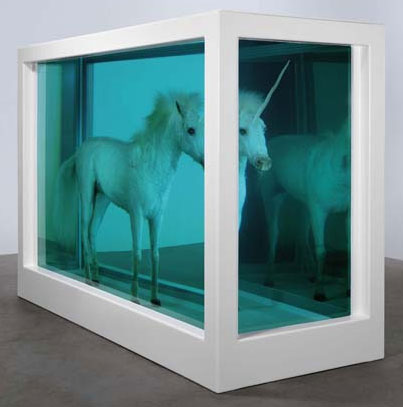
    The Mystery of Unicorns

    One of my latest findings on a day trip to the wildlife and holiday resort Catalina Island, California, was a long spiraling sea shell. It felt somehow magical when I weighed it in the palm of my hand. Its spiraling shape, the shimmering tones of cream, redbrown and white somehow reminded me of unicorn horns.

    As a child I had been an avid reader of the Narnia Chronicles by the novelist C. S. Lewis (1898 – 1963), in which unicorns were characterized as both beautiful and very noble and honorable creatures.

    The unicorn is a powerful symbol of good in early pagan mythology. Almost all images of unicorns depict a white horse of slender build, with a single large, pointed and spiraling horn projecting from their forehead.

    I asked myself how contemporary artists were exploring this topic, whether this magical creature is still associated with fairytales and the mystical landscapes of King Arthur in Britain and Cornwall…


    Damien Hirst, The Dream, 2008.

    Damien Hirst first shot to fame with his “shark tank”. But the image of the beloved mystical figure, the unicorn (he used a real white foal) in formaldehyde is somewhat sad.

    Damien Hirst, The Dream, 2008

    “The Dream” belonged to a highly publicized (and criticized) auction of 233 works by the contemporary artist Damien Hirst in 2008. Nearly 20,000 people visited Sotheby’s New Bond Street premises to see what looked like a polished retrospective. With the Sotheby auction called “Beautiful Inside My Head Forever” the artist sidestepped the traditional gallery system to sell works directly through an auction house for the second time.

    Ben Hopper, Unicorn Girl (from the series Naked Girls with Masks), 2010

    Ben Hopper is an Israel-born London-based commercial and fine art photographer. His work includes scenery, movement, and mood. He primarily photographs conceptual fashion, portraits of dancers, circus artists, musicians, and risqué nudes. His latest series, Naked Girls with Masks, falls squarely into the last category. Naked Girls with Masks, the series from which this photograph stems, was previewed at the underground London group art exhibition ACT ART 8 in July 2010.

    Camomile Hixon, Missing Unicorn, New York 2010