Blog Posts

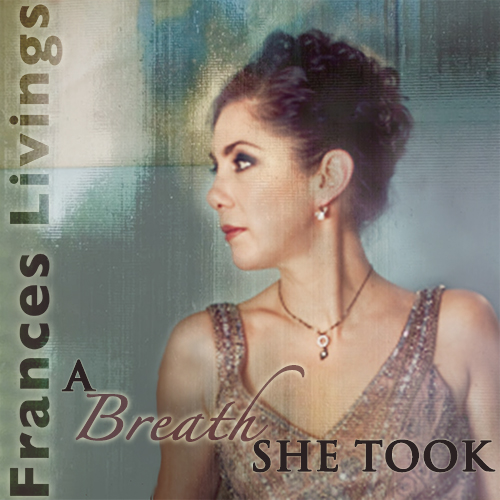
CD cover EP A Breath She Took

A Breath She Took ~ A new Jazzoetry Release


CD cover EP A Breath She Took

While sorting through material for my first full-length musical poetry, aka jazzoetry album, I came across three poems I had already recorded. Listening back to them with fresh ears, I suddenly realized that they were thematically too different from the other pieces I was writing. I thereupon decided to release these three pieces separately. These poems – now jazzoems – will be available in January 2019 as a three-track EP in all digital music stores titled A Breath She Tookwhich is also the name of the first jazzoetry piece.

All three are of autobiographical nature. This is exactly why these three pieces stood out from the other pieces, which are about other women. In these still unreleased poems I have been exploring an array of unusual, often imagined stories about women from diverse cultural and socio-economic backgrounds. I have focussed on their unique struggles – but not my own. Although, maybe I did in a metaphorical and symbolical way, now thinking of them.

Jazzoetry. The Principle

The principle that unites all of these poems musically is that they follow the same approach of poetry in combination with jazz improvisation [= jazzoetry]. I developed this concept in 2009 when I first released my piece Gold & Frankincense as a single. It was followed by the EP During the Hours, which includes my favourite piece, Songs of the Soul, initially inspired by the saxophonist Zane Musa. You can read about the development of this story here.

Once I have completed a poem, the recording process follows the same method for each one but is of course at the same time, very individual: According to the sentiment and temperament of the piece, I search for a jazz musician with great improvisational talent. Atmospherically, I want her or his instrument and playing to feel and sound most suitable in the interpretation and illustration and communication of that specific poem.

Jazzoetry. The Recording Process

My goal is always to capture complete performances. Unlike the usual studio procedure of assembling tracks, I don’t want any overdubbing or editing to take place. This would spoil the principle of a live improvisation and any spontaneity involved. That’s why I ask each musical soloist –who has never read the poems prior to their studio arrival– to respond to my reading as if they were at a live jazz gig, improvising on the spot.

Each piece is recorded live in two separate recording booths in dialogue: with my recital of the poem and the individual instrumentalist’s interpretation. For my reading and performance, the atmosphere of being in the moment, just like on stage is often just as inspiring and electric as it is for the musician. Invariably, my concept is usually achieved within two to three takes.

Jazzoetry Recording of A Breath She Took

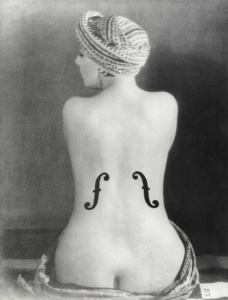
For the poem A Breath She Took, which is track number one on the EP, I chose the cello for its warm and resonant sound and its associated features: the softly swung curvatures of a female body. Albeit loving the piano, I have a very close relationship with the cello. It was my first instrument as a child. I was extremely proud that our music teacher chose me to be trained for the school orchestra. When we moved to Germany, however, I was completely heartbroken: the cello was a school instrument and I consequently had to give it up.

Le Violon d'Ingres (Ingres's Violin) Artist/Maker: Man Ray (American, 1890 - 1976) Culture: American Place: Paris, France (Place Created) Date: 1924 Medium: Gelatin silver print Object Number: 86.XM.626.10 Dimensions: 29.6 × 22.7 cm (11 5/8 × 8 15/16 in.) Copyright:
Man Ray, Le Violon d’Ingres (Ingres’s Violin) Paris 1924 © Man Ray Trust ARS-ADAGP

Ironically, later, my mother bought herself one and started taking lessons, which obviously brought up a lot of feelings. The cello therefore mirrors perfectly not only my longing for that instrument and the close relationship I was developing with it, but my longing for an empathetic, nurturing and loving mother.

I asked the cellist Matthew Cooker to provide his improvisational talents. He is one of Los Angeles most prolific cellists and has played in many orchestras and for diverse live artists (like Barbra Streisand and Luis Miguel). I first met him on a studio session for a few tracks on my fist solo album The World I am Livings In, which consists of very sparsely instrumented songs, surrounding themes of loss. Matthew’s playing has, in equal parts, the right amount of tenderness, fierceness and edginess a cellist. He moreover, possesses a sheer endless inventory of resin, ego, musicality, creativity and elbow grease.

When we were recording A Breath She Took live in the studio, I felt that that he was translating the contents of that piece and complimenting my reading so fittingly that I spontaneously decided to ask him to also improvise over my reading of another piece: Goldfish Bowl. [Read the lyrics by clicking here]


Jazzoetry Recording of Goldfish Bowl

So once again we were recording live, in a dialogue between voice and instrument and Goldfish Bowl, became the second poem on the EP. This piece is about the taxing and highly confusing effects of being psychologically abused. It’s about feeling trapped – even if only in one’s own head. And how a state of feeling crazy, slowly takes hold, destroying self-confidence and self-trust. Goldfish Bowl is about utter helplessness dwindling into hopelessness being that the abuse is already taking a severe toll. [Read the lyrics by clicking here]


Jazzoetry Recording of Ink on Silk


The third and last piece on the EP, Ink on Silk is similar to Goldfish Bowl because it’s about feeling highly frustrated and crazy-made. In Goldfish Bowl there’s a permanent state of lingering, total confusion and powerlessness. Whereby in Ink on Silk it is about trying to solve things but not having any impact, thus getting more and more infuriated and frustrated. This is why a percussive instrument with clanging metal bars seemed so suitable.

I had heard the vibraphonist, Nick Mancini, a couple of times live and was always impressed by his eagerness and fearlessness to improvise both rhythmically and melodically on his instrument. Some soloists carefully plan their improvisations. But Nick lets his instrument lead him, moreover, seduce him into stepping out onto stormy expeditions. During the recording of Ink on Silk, he was also able to create some quite unusual sounds by almost bending the aluminium sound bars with his felt mallets and giving the piece its perfect colourings. [Read the lyrics by clicking here]


Future Jazzoetry Projects

My next jazzoetry project will be to complete writing, and then to record and produce a full-length Jazzoetry album. It will comprise around 15 poems featuring a similar number of outstanding jazz soloists. The poems I am writing for this album explore an array of typical female topics. They are based on women from very diverse socio-economic and cultural backgrounds.

Being a woman myself, I have always been interested in my own and equally intrigued by other women’s paths. Being that per society and biology, we still face completely different challenges than men. There are so many stories and dreams of other women that ultimately seem to interweave with one another’s. Many stem from the sad truth that culturally, socially and politically (thus, economically) we are still confined and suppressed by expectations.


If you enjoyed this post PLEASE support my work!

Buy or stream your copy from one of these digital online stores:

Or, you can simply…


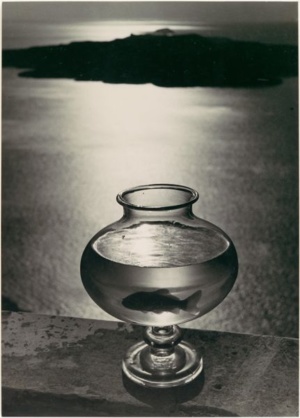
https://franceslivings.com/poetry/goldfish-bowl/herbert-list-goldfish-bowl-santorini-greece-1937-gelatin-silver-print
© Herbert List, Goldfish Bowl, Santorini Greece, 1937
Frances Livings O Barquinho My-Little-Boat Brazilian jazz Bossa Nova

The Best Bossa Nova Songs: O Barquinho ~ My Little Boat


Finding new songs for my foreign-language repertoire always involves a lot of musical archaeology. It’s definitely very enjoyable. It’s like stepping into a dark, mysterious castle with only a spotlight at hand, never knowing what you’ll find. That was how I came across O Barquinho (Little Boat) from 1961. It’s a very playful and cute Bossa nova song about a boat sailing along on a calm summer day as the evening falls.

Frances Livings O Barquinho My-Little-Boat Brazilian jazz Bossa Nova

I had only recently discovered the American vocalist Karrin Allyson through a search for interpretations of the French chanson Sous le Ciel de Paris, which I was adding to my French repertoire. Her version of this 1951 classic from the French film bears the same title. It’s from one of her early albums, From Rio to Paris. I love her very grounded voice and her elegant intonation – despite finding her interpretation a little dry or even humourless. She frequently spikes her songs with very delightful and short, not endless, self-indulged scatting sequences.

So, while enjoying a cooking session in my kitchen, I flipped through the other songs in French and Portuguese. I immediately took to her very cute and enticing version of O Barquinho, sung in both beautifully phrased Portuguese and English. Later, I understood why The New York Times, had called her a “no-frills singer with a feline touch and impeccable intonation, […] is an interpreter who cuts to the chase, but with minimal psychodrama.”


Brazilian Jazz Rhythms ~ The Bossa Nova

I have now been performing O Barquinho after learning the Portuguese lyrics for a couple of weeks now. In its lightheartedness and cheerfulness, it very much reminds me of tunes like Summer Samba (also known as So Nice and in Portuguese Samba de Verão). So Nice is a song I also enjoy singing because of its cheerful bounciness. It was written in 1964 by the Brazilian composer Marcos Valle, with English lyrics by the American lyricist Norman Gimbel and original Portuguese lyrics by the composer’s brother, Paulo Sérgio Valle.

O Barquinho was written three years earlier and also has very buoyant lyrics. Its rhythmical temperament makes it a very typical bossa nova song.[2] When playing these kinds of songs live, it is crucial for the right tempo to be counted off. If it’s too slow it will lose it’s lightheartedness and cheeriness. When only a bit too fast, it’s like singing the title melody to a breath taking car-chase. Another element of course, is the groove itself. While So Nice is a Samba and O Barquinho is a Bossa nova, Brazilian jazz tunes like these have in general their very own rhythmic feeling – like the Bossa nova composer Carlos Lyra, described  in reference to one of his own songs, Influência do Jazz. He said that overall, the rhythm has a “swaying” feel rather than the “swinging” feel of jazz. The samba rhythm moves “side to side” while jazz moves “front to back”.[3] 


O Barquinho (The Little Boat) 1961 ~ The Topic of the Sea

This swaying notion lends itself of course perfectly to the topic of the sea. Indeed, Roberto Menescal used references to the sea in many of his songs – like in O BarquinhoRoberto Menescal was born on October 25, 1937 and is a Brazilian composer, producer, guitarist/vocalist and important to the founding of bossa nova.
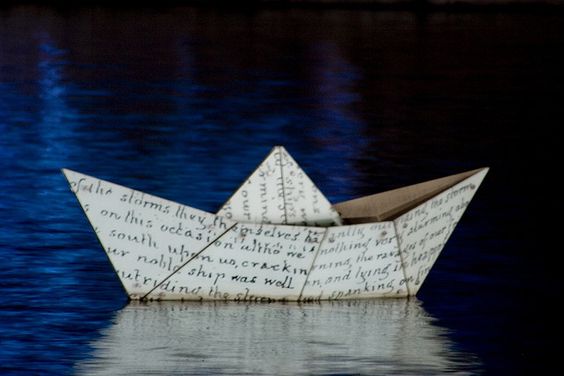
The idea for the song came when Menescal, Ronaldo Bôscoli (another composer), and some other friends were in a boat just off the coast of Cabo Frio, a city near Rio de Janeiro, when suddenly the boat had problems and the motor broke down. To pass the time, Menescal started playing the guitar and making up a tune. By the time another boat came and rescued them, he had created the main parts of the song. He and Ronaldo Bôscoli completed it the next day. The English version, My Little Boat was written by the songwriter, musician and producer Buddy Kaye in May 1967.

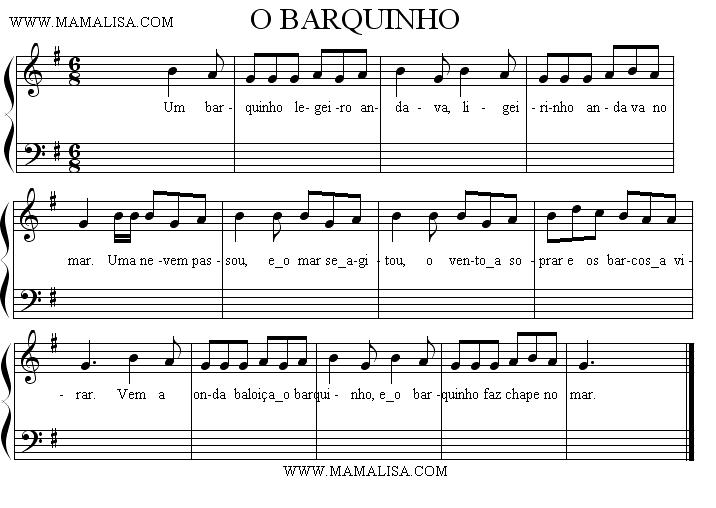
The topic for the song was obviously already present but the Portuguese children’s song, that carries the same title, O Barquinho may have also influenced him. You can read the Portuguese lyrics and an English translation here.


O Barquinho was first recorded in 1961 by the guitarist João Gilberto. A year later, in 1962, it was recorded by the American guitarist Charlie Bryd – and many times since then. That year, the American entertainment magazine Billboard – also known for its music charts, including the Billboard Hot 100 and Billboard 200 – listed Charlie Byrd’s recording of O Barquinho in the column of singles with “strong sales potential”. Indeed, it was to become one of Menescal’s most famous songs.

O Barquinho Brazilian Jazz 1961 Roberto Menescal
 

And here’s João Gilberto’s version from 1961:

Did you like this post? If so, why not…
*

Listen to O Barquinho and other beautiful Samba and Bossa Nova Songs here:

Further Info & Reading on Brazilian Jazz:

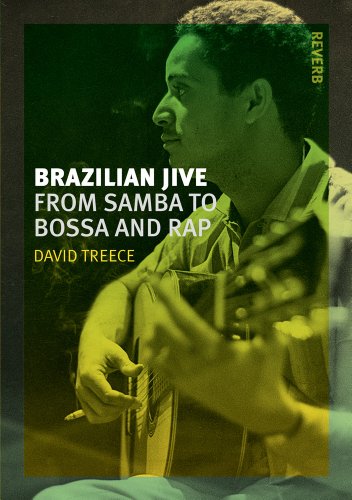
~ For some more insight into this music genre check out the book Brazilian Jive: From Samba to Bossa and Rap” by David Treece, professor of Brazilian studies, author, and founder of the Centre for the Study of Brazilian Culture and Society.

~ Watch the documentary filmCoisa Mais Linda: Histórias e Casos da Bossa Nova (This is Bossa Nova: The History and Stories) released in 2005: Menescal and fellow trailblazing composer Carlos Lyra tells the stories of the people, places, and performances that put Brazilian music on the international music scene in the early 1960s, culminating in a 1962 performance at Carnegie Hall in New York.

~ See also this playfully illustrated and informative website called Mama Lisa’s World that collects international children’s songs from around the world.

Brazilian Jive (Reverb Reaktion Books by Treece, David

Here’s one of my Brazilian tracks, Aganjú, from my album Ipanema Lounge. It was written by Antônio Carlos Santos de Freitas (Carlinhos Brown) [EMI Blackwood Music Inc.]. My recording features a dear friend and fellow musician,  Robert Kyle on alto flute, tenor & soprano saxophone, who is also responsible for the arrangement at the beginning of the track:

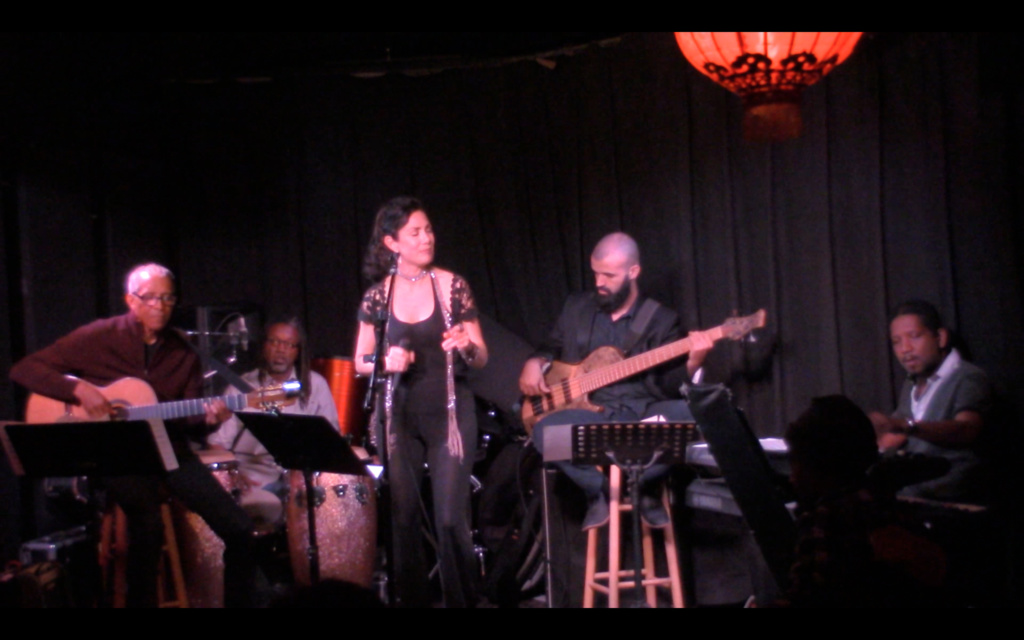
Frances Livings performing live with jazz band Ipanema Lounge at Genghis Cohen 2016-07-05

Genghis Cohen ~ L.A.’s Legendary Singer-Songwriter Venue


Genghis Cohen

Almost every musician in L.A. knows Genghis Cohen! It’s one of my favourite music venues to play at with the full band. It’s a famous singer-songwriter club but astounding enough, it’s primarily a Chinese restaurant but it has a lovely, separate music room with a stage, lighting, and a backline. I usually perform there every two months and often try out new songs, in February, I presented my new single, Ma Solitude. Naturally, I always play songs from my latest album, Ipanema Lounge (2016) and include a few from The World I Am Livings In (2013).

Genghis Cohen is a Hollywood staple and has now been around for 35 years. That’s a long time for the fast-moving and ever-evolving restaurant scene but also for a music club. I always look forward to being there. The atmosphere is very artist friendly and some of my favourite sound people work there. Over the years, I have played there with different musicians and in various constellations. And sometimes, mostly by chance, I have even met stars like Jackson Browne, Stevie Wonder and most recently Annie Lennox, who was there to see her daughter, Lola Lennox perform.


The “Original” Genghis Cohen

The original owner, Allan Rinde (1942–2012, opened Genghis Cohen in 1983. But it was his friend Artie Wayne who thought of the humorous name “Genghis Cohen,” coupling the first name of the Mongolian warrior-ruler and a common Jewish surname. Allen was Jewish, hence the “Cohen”. He had been a staple in the music industry for decades. I luckily got to meet him on many a night, when he occasionally dropped in, even after he sold the restaurant 15 years later.

Allan was a former publicist, a journalist, the West Coast Editor of Cashbox. He sadly passed away suddenly on December 16, 2012. Allan was head of West Coast A&R at Columbia, where he was behind Billy Joel’s first hit, “Piano Man,” and he was the man who helped break the Jesus Christ Superstar album.

A close friend and colleague, the songwriter and producer Artie Wayne, who had over 250 covers recorded by such artists as Michael Jackson, Aretha Franklin, and Tony Orlando wrote a wonderful blog post you can read here, covering years of insider stories in and around Genghis Cohen, their years in the music industry and of course many celebrity encounters. Another interesting article is here.


Under New Ownership in 1998

In 1998 Allan sold the restaurant to Raymond Kiu, who had been a waiter at the restaurant for 14 years. After his death, his son Denis Kiu took over. He, however, also died prematurely, at the age of only 43 of a heart attack. A lot has changed in the last few years but that said, atmospherically, not that much.

That is why this article from 1998 in the L.A. Times still, in a way, rings true and names some of the reasons why I still love playing there:

“The Cantina [the music room] is configured like a church, with benches functioning as pews, and a stage functioning as the altar. The room is warm and inviting and manages to make both the performers and guests feel at ease. In fact, they are. Too many clubs are set up to incite little interaction between audience and performer, but the family-like comfort of the Cantina inspires a bit of camaraderie.”

The music room is only one part of the complex. It consists of the restaurant, the bar area, and the closed-off music room. The restaurant section sports red leather booths, dim lighting, and red accent walls. There’s a bit of Old Hollywood charm, along with self-conscious kitsch. Sadly, since the most recent restauranteurs took over in 2015, this has, however, slightly diminished. But – when in Los Angeles – paying the venue and restaurant a visit is still a must for music lovers!


Did you enjoy this post?

lonesome figure horizon sun set blue landscape solitude tree

Livings In Los Angeles – Ma Solitude

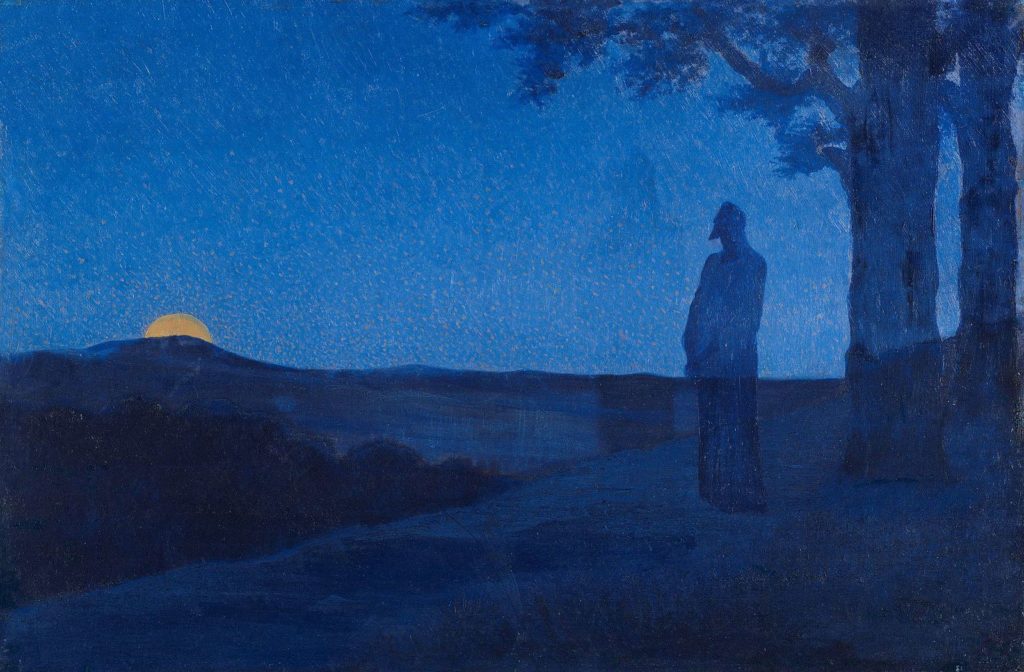
lonesome figure horizon sun set blue landscape solitude tree
Alphonse Osbert, Solitude du Christ, 1897


I am writing this blog post shortly after the release of my new single, the French chanson Ma Solitude. I have known and loved this song since I was in junior art college, where I also studied French (read more about those influences in my post on French Chansons). Ma Solitude was written in the 1960’s by the singer-songwriter Georges Moustaki (1934-2013), who became famed in France for his repertoire of simple romantic ballads, one of them being Édith Piaf’s hit song “Milord”.

Although it’s been in my repertoire for quite a while now, I only recently decided to make a recording. My motivation was on the one hand, that my connection with this beautiful tune had deepened naturally after having performed it so many times. On the other hand, it was almost as if I had to learn what the song really meant before recording it. Ma Solitude came to mark the end of a very painful journey both emotionally and geographically. It stands for a time during which I felt utterly alone but somehow transitioned into a state of solitude, which in contrast to loneliness, offers a special value to those who learn to cherish their own inner worlds. This is after all, exactly what the song describes. It has therefore been emotionally very cathartic to sing.

Ma Solitude is such a beautifully crafted melancholic song but it is not sad. While you listen to my new recording you can read the French lyrics and an English translation by clicking here.

Available for streaming and downloading:


2016 – A Year of Many Losses

The years 2016/17 were for me personally completely traumatic. After months of stressful arguments, debates, break-ups, and reconciliations, my husband moved out in May. It was so hard to adjust to being on my own again and the challenge of trying to survive as an artist in one of the world’s most expensive cities seemed almost impossible. I somehow managed. But then, in the autumn, I was given notice on the house we had been living in for over eight years – a house that had been our home and that, in midst of all of the change, at least was a familiar staple. Unsettling for me, as was for many, was then the shocking outcome of the US election in November. It became apparent that more people in America – more than most had ever imagined –, had voted for a misogynistic, narcissistic, reality-TV creator, simply an autocrat: for Donald Trump.

It verified for me a complete decline of society, which ironically felt like the epitome of my life.

I was “hanging in” as they say, until completely out of the blue, on December 16, my beloved dog Ginji died. I surrendered to a paralyzed state of utter grief and shock. Ginji was a beautiful, mischievous Whippet-Basenji mix who I had named after one of my favourite jazz tunes Dindi. I have since then been unable to sing that song live. My other dog, a small rescue called Leonora, was similarly shocked and visibly grief-stricken. For weeks she would run out of the door into the garden and then stop, look behind her and – wait, wait for Ginji to join her.

Meanwhile, I still had to face the task of packing up a decade’s worth of married life, of hopes and dreams – many, that never came to be. I had no clue where I would move to or what I would do. My small family had diminished within a few months from four to three, and then suddenly to two members. And although “It Never Rains in Southern California”, those were the months with the most rainfall in years. So last year I spent Christmas in utter loneliness, grieving. It was the first year of not creating a warm and festive family Christmas – for us, his sons, their partners, and random orphan friends.


Months of Restless and Relentless Moving…

I was so distraught by January from all of the losses, that I felt more than paralyzed by all of the decisions I had to make. Would I even stay in Los Angeles? Would it be better to move back to Europe? Maybe I needed to get away from the political climate, away from all the heartbreak? Do a “geographical” as they say. I felt too heartbroken to think clearly. In addition, the housing market in Los Angeles was, and still is, in a total crisis. So to find an affordable, clean and dog-friendly apartment anywhere, was more than daunting.

The packing of endless boxes, the wrapping of furniture in old blankets and discarded sheets felt sheer overwhelming. What would I keep, what would I even need in the future? Where and what was my future? I managed to cram everything into a mobile storage container that was picked up by a huge truck and hauled off to Compton. What followed was quite an odyssey. I spent five fairly unhappy and cold but also eye-opening weeks in Berlin but then returned to L.A. in April. I was determined to find an apartment and refocus on my music and writing. While apartment hunting, however, I had to couch-surf here and there, constantly looking for new places to stay for as little money as possible. It was distressing for both my little dog and I.

But a few weeks later, in May, I finally found a new home! So I thought. My luck didn’t last. After two days I started to get throbbing headaches and flu-like symptoms. But I had no fever. It dawned on me that I was having a severe allergic reaction. That something was wrong with the apartment. It had smelled musty when I moved in but I thought it was just lack of being aired out properly. After talking to the neighbours and doing some research it became apparent that it was toxic! There had been water damage, which had never been properly tended to, and behind the walls the building was full of hidden mold!


Not Being Able To Function on Many Levels

Feeling absolutely awful, desperate, heartbroken, and sick, I knew that if I didn’t move out again, I would never be able to function again, let alone sing. So in June, I was forced to pack everything up again and put it into storage. After that second move, I basically collapsed and fell incredibly ill for six weeks. I had such a painful and hacking cough, that I had to use an asthma inhaler. An x-ray of my lungs showed that at least it wasn’t anything like the valley fever, fungal pneumonia that can lead to hospitalizations. But I was unable to earn much money, so yet again, I bunked with friends. Some of these “friends” I had never met before. I learned very quickly who stepped up and who couldn’t be bothered. On August 6, still searching and in full-on crisis mode, I was taking a break, sitting on a park bench, poking around in some greasy, store-bought salad in a plastic container, and wrote in my journal,

“I watch the homeless thinking, I feel you – I’m one favour away…”

During that time I definitely gained empathy for people whose lives, sometimes through a simple turn of fate, unravel. The sight of hundreds of homeless encampments thereafter has become more and more unbearable.


One Year Later – Full Circle

Then finally, in September, I was able to move into a proper home in L.A. again. It felt as if years had gone by – around the world in 90 days – and emotionally they had. Despite still feeling all of the losses in my bones, this Christmas, I am spending my alone time reflecting in solitude but not in loneliness. And this is exactly what the lyrics of Ma Solitude illustrate so perfectly and why I wanted to record the song before the year was over, so to also mark a full circle. The chorus alone is a beautiful and clever oxymoron:

“Non, je ne suis jamais seule / avec ma solitude”

which means, in a very existentialistic way, “No, I am never alone / with my solitude”.

Being in solitude implies being on your own but Moustaki cleverly personifies this “quality time” in one of the verses as if it were time spent with a lover. And the third verse always brings a smile to my face:

“Quand elle est au creux de mon lit
Elle prend toute la place
Et nous passons de longues nuits
Tous les deux face à face”

The intimate scene of two people sleeping in a bed together makes me think of my little rescue dog Leonora. She felt the loss of Ginji, who was like a mother to her, as much as I did. Leonora now seeks solace by hopping onto my bed at night and curling up into a little furball – in that dip in the middle of bed, that “creux de mon lit” and indeed, “elle prend toute la place”!

To reflect this kind of intimacy of the song is why I ultimately decided to record the song with a very intimate ensemble, consisting of voice, guitar, and double bass. Another meaningful factor was the release date I chose, the 16th of December, marking the anniversary of Ginji’s sudden death.


Ma Solitude versus Loneliness

After sharing these very personal experiences and my motivation to record Ma Solitude I would like to bring the following to anyone reading this:

Obviously, solitude can only be productive if we don’t feel excluded, hurt or punished.[1] But in tranquil times it offers an intimate connection, a realm of solace, like with a lover. The philosopher Friedrich Nietzsche declared on a similar note: “My solitude doesn’t depend on the presence or absence of people; on the contrary, I hate he who steals my solitude without, in exchange, offering me true company.” The French philosopher and novelist Jean-Paul Sartre even wrote, “If you’re lonely when you’re alone, you’re in bad company.”

Ma Solitude has always so poignantly illustrated the beauty one can find in alone time. It’s a deep connection with oneself. But this connection can obviously also get severed in times of deep grief and trauma when our brains are stuck in a state of terror and operate in pure survival mode. Sadly, not everyone is capable of this inner connection or willing to let go of this sometimes almost meditative state. I was quite shocked to recently read about a study at the University of Virginia in which several participants – a quarter of the women and two-thirds of the men – chose to subject themselves to electric shock rather than be alone with their thoughts.[2]

On the other hand, it seems as if in our hyper-connected, social-media-driven and extremely competitive society, alone time or solitude is more devalued than it has been in a long time. The author Ray Williams writes in an essay published in Psychology Now, “all current meanings of ‘alone’ imply a lack of something. Invariably, a desire for solitude is viewed by others as a sign that there is something wrong. Even worse, people associate going it alone with antisocial pursuits and unnecessary risk-taking, like jumping off cliffs. And when we see photos of people sitting alone by a lake on a mountain top, many of us might wonder if that person is lonely or even depressed.”[3]

For me, solitude is about consciousness. It’s about asking the – sometimes uncomfortable – questions, how deeply am I feeling myself when I’m feeling lonely? Am I feeling disconnected and if so, where is it stemming from? Are we comparing other people’s outsides with our complicated insides? Especially social media can have that effect. On Facebook, we only see glossy versions of our “friends’”. We see their feats but seldom their failures illustrated by carefully curated glamour selfies. During this outer and inner journey I was forced to embark upon, my inner world has shifted from grief and loneliness to solitude. In the process, I discovered who my real friends were – one of them being myself.

Button image to buy the jazz song French chanson Ma Solitude by Frances Livings on Bandcamp

Click on the picture to stream the song on Spotify or download the recording from Bandcamp or from iTunes.

Click here to read the French lyrics and an English translation.

Did you like this post? If so, why not…
Also, keep an eye out for my next blog post on inspiring art depicting the topics loneliness and/or solitude.

May you also find some inspiration in the following books:

Book cover Solitude A return to the self Anthony Storr

Book cover Gabriel Garcia Marques One hundred years of SolitudeBook cover The Alchemist Paulo Coelho

Book cover Michael Harris Solitude


_________________________________

[1] Brent Crane, “The Virtues of Isolation”, in The Atlantic, posted March 30, 2017. https://www.theatlantic.com/health/archive/2017/03/the-virtues-of-isolation/521100/

[2] ibid.  [see also Matthew Hutson, „People Prefer Electric Shocks to Being Alone With Their Thoughts”, in The Atlantic, posted July 3, 2014 https://www.theatlantic.com/health/archive/2014/07/people-prefer-electric-shocks-to-being-alone-with-their-thoughts/373936/.

[3] Ray Williams, “Why Solitude Is Good and Loneliness Is Bad. Loneliness is becoming an epidemic but the value of solitude is unappreciated”, in: Psychology Today, posted Oct 31, 2017, https://www.psychologytoday.com/blog/wired-success/201710/why-solitude-is-good-and-loneliness-is-bad.

Livings in Los Angeles. Whole Foods and the Terror of Me. Now!


It’s Tuesday, so-called “Taco Tuesday” to be precise. Beaming at everyone with a Californian sunshine smile, a young “dude” with a white cap and the gestures of a 1920’s hotel bellboy is handing out samples. I’m in a hurry and shake my head to decline. “It’s vegan!” he says quickly, as if that would be the ultimate selling point, passing me a small paper cup with a barely bite sized nibble. I thank him. It looks a bit like shriveled up cat food so I tip the contents into my mouth and chew… it tastes ok – for cat food.

Throughout the store the cool air is permeated with the sickly smell of freshly pressed wheat grass, mingled with the heavy aromas of roasted, fair trade coffee beans and hot, free range lemon chickens. Take-out dinners galore are flying off the shelves: golden slices of freshly baked truffle pizza, extravagantly shaped bottles of pomegranate juice, barley-spinach salad, curry tofu, eggplant hummus and rainbow sushi – you name it. The choices are overwhelming and the prices astronomical.

I am at Whole Foods, one of Los Angeles’ most popular health food supermarkets. Only half jokingly, people also call it Whole Paycheck. Founded in 1980 in Austin Texas, and beginning its expansion only four years later – to California in 1989 and to the UK in 2007. This one is located just behind the popular Farmer’s Market and The Grove on Third Street. The location has always struck me as odd. It’s wedged between the drugstore CVS, a row of cheap boutiques with discount clothes from China, bargain wig shops and Kmart.

All of these stores share the same huge parking lot: an asphalt arena sporting two anorexic palm trees that heats up unbearably from the permanent glare of the sun. This definitely isn’t quite the setting you would normally think of when purchasing organic Deep Breathe Tea, fair trade organic quinoa and Yoga mats made from recycled plastic water bottles. Because this is also where regularly verbal fights, vicious glares, dirty hand signs and other mostly empty threats over parking spaces are exchanged. Especially when temperatures around noon start rising and the pressure of shopping for certain holidays, mostly equated with food, are approaching. Parking around Thanksgiving? Forget. It. A while ago a rapper even recoded a video titled “Whole Foods Parking Lot”.

Generally, in Los Angeles parking is not only a problem but a phenomenon – unlike in any other city I have ever visited. Whatever you attend in Los Angeles, the first question will be: “What’s parking like?” or “Where did you park?”. When posting events to mailing list subscribers or sending out invitations to private parties, some people will even boast about “great parking” or even “free parking!!!!!!!!!!!!” In which case I should add a row of exclamation marks too, because at Whole Foods parking is FREEEEE!!!!! (and your mattress is too but that’s a whole other story….).

For Los Angeles this is indeed very unusual because most of the time it can be quite aggravating and expensive to find a parking spot which was why driving services like Lyft and Uber have become so successful. Usually, if you didn’t want to risk a parking ticket, or drive in circles for hours, you would have to surrender to paying between $5 and $10 for valet parking. That was something I had never heard of before visiting Los Angeles for the very first time in June 2005 and something that seemed so endlessly posh and extravagant at the time for someone like me, so used to taking public transportation or going by bike. That is however, in Los Angeles, something only people do who clearly couldn’t afford a car.

But that’s exactly one of Los Angeles’ main attributes, a deep divide between social groups which is strangely epitomized in that very cluster of stores: Whole Foods’ lunching and munching impulse-shoppers and fussy label-readers couldn’t be more opposed to the coupon-clipping, bargain hunting low-income families that frequent American superstores like K-Mart. These poor, frequently obese consumers you will find eating a GMO-laden corn dog (or two, or three) before they head back to their beaten up Chevy with their jumbo, jam-packed shopping cart, drinking out of oversized plastic beakers sporting words like “BIG GULP”.

The average crowd at Whole Foods has most likely got a BMI of 23 and is ethnically an unbalanced mix of generally youngish, Silver Lake’ish, white Caucasians. Then there are of course the celebrities I never recognize and brigades of mostly South American housekeepers and nannies filling up shopping carts. There are always a few street people roaming the aisles, seeking for samples, clueless tourists wandering around mostly looking to quench their thirst and soothe their sunburn and security guards languidly eyeing everyone but mostly their iPhones.

It’s lunchtime and like so often, it is absolutely packed. I have been darting through the isles like a slalom skier at the Winter Olympics but have successfully been able to avoid confrontation with other shoppers. Now finally, feeling relieved but highly agitated, I have reached the check-out queue, shopping basket in hand, well-knowing that my three and a half items will cost at least thirty dollars.

To add to this slightly frantic atmosphere, disco music is blaring out of the loud speakers, interrupted every now and then by someone mumbling incomprehensible slogans. I only catch fragments, “grass fed…organic…Taco Tuesday” Then the sound of Donna Summer’s Bad Girls picks up again. I suddenly realize that, behind two turntables, set up between the vitamins and cereals isles, there is a DJ juggling vinyl records. Dressed in the obligatory hipsters’ uniform; a large woolly hat, black framed glasses and a full sleeve tattoo, he knowingly nods his head to the beat. I wonder how long it takes him to comb his beard in the mornings and whether he has strange hobbies like competitive wood chopping.

Suddenly, to my horror, I realize that I have of course chosen the wrong queue. Other shoppers have already begun flocking towards the alternative ones and a bored looking Asian guy is now standing behind me with a very reluctant look on his face. It’s too late now to change queues. And it’s Murphy’s law somehow, that whichever one you switch to, your original lane will suddenly speed up and you’ll take even longer to check out. But now I’m stuck behind a short blonde, clad in expensive looking yoga wear, frantically trying to discuss lunch choices with her two-year old.

With an annoyingly high-pitched Valley girl voice she lists organic macaroni and lactose free cheese, versus gluten free spaghetti with vegan meat sauce. She isn’t paying any real attention to her frustrated child who is simply overwhelmed by the complexity of these choices. Tears are already welling in his big eyes and it’s obvious that he is dangerously close to throwing a tantrum. Annoyingly, she’s not taking any notice of the cashier either, who is looking to check out her items that she is still waving in front of her child. But the bored looking dude at the check-out is either just far too patient or has taken too much Xanax to care. Then the blonde woman’s mobile phone makes a “ding!” sound and her focus is immediately drawn to a text message she hastily starts responding to. I indulge in one last eye-roll and turn away.

Standing there in one of Los Angeles’ most iconic take-out food temples, I realize once again, how this overindulgent and lavish lifestyle, that at the same time, is so disconnected and distracted sometimes, really depresses me. Every neuroticism is pandered to, guaranteeing the fulfillment of every food fad or first-world hysteria, whether gluten free, vegan or organic. I watch the blonde mother virtually stress her young child by trying to project her own neuroticisms and neediness onto a child that simply needs food, a simple lunch, as nourishment. But it’s not about him, not really. It’s about her. Which is exactly what sometimes so bothers me, being so frequently witness to people’s narcissism.

Waiting there in that queue I feel as if I’m drowning in this extremely high concentration of the Me! society that pollutes the air in most of L.A. Not only at Whole Foods but in so many other places, in relationship to food, you hear these high pitched voices nauseatingly screeching, “OMG. I so need to eat!” which means, “Go run! Now! P.A./assistant/other slave-like person and fetch me a highly complicated list of goods and ingredients to show how well I care for myself and how much I love and embrace my needy little inner child, like my therapist and yoga teacher told me to: “Panini – only roasted for two minutes, one side only, no cheese, extra onions, coleslaw on the side (extra plate and extra pickles), triple mocha latte (soy milk)…” You would think if someone can be bothered to give out all of these meticulous instructions, they could as well make it themselves…

But this is why Whole Foods, with its seeming endless variety of products, is the ultimate supplier and why its popularity reaches its peak at meals times. It crawls with customers who, like spoilt little children, are on a constant search to claim their uniqueness and exclusivity even in their selection of prepared lunches, carrying with them an air of entitlement – to special favours, to special treatment. I watch this disconnect, that keeps the aspiring narcissist neatly tucked into their cushion of grandiosity, with much discomfort. It sadly also seems so be representative of a culture that feeds and grooms the me-generation with the terror of now! The strain and the demand of instant supply and therefore instant gratification. It is deeply connected to the terror of busy. I’m so busy, have no time to prepare food I am therefore important. I therefore am. So even food consumption, like most of the city itself, has become a huge, self-inflating and promoting production. What happened to the good old cheese sandwich, a boiled egg and an apple?

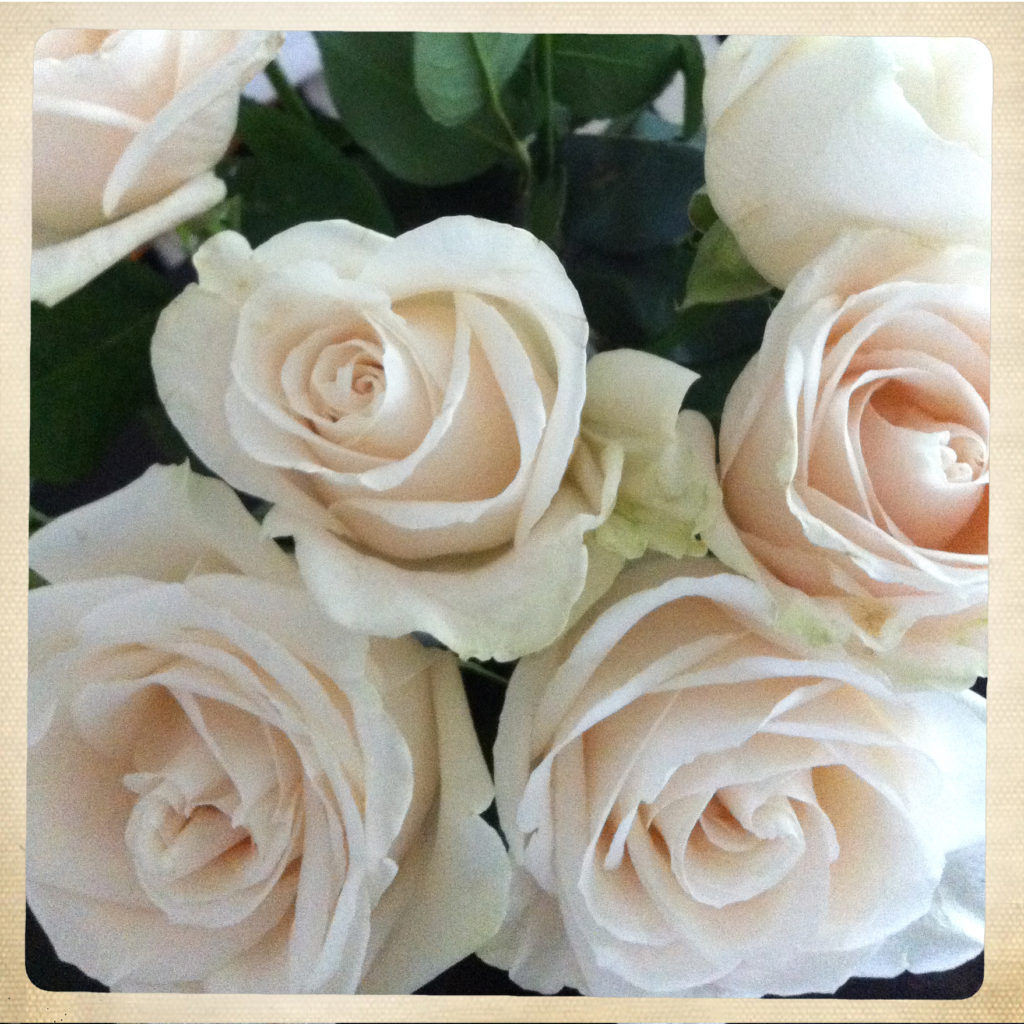
Objects of Desire – Are You Smelling the Roses?


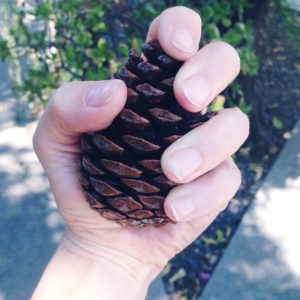
Like almost every morning, I took the dogs to the park for a good, over an hour walk. While they were enthusiastically hunting and chasing squirrels, I discovered this beautiful clean and completely intact pine cone. I thought of a brief chat I had had with a very friendly Korean woman, a few weeks ago, who, in her broken English, had shown me how she uses simple objects from nature, like pine cones, or the rough bark of a tree to massage parts of the body. The principle being that of traditional acupressure.

So I picked the cone up and carried it with me, alternatively clenching it in each hand for a few minutes, the opened, flexible scales giving way in the process, massaging the palm of my hand and strengthening my fingers. I am very much a practical, hands-on person who loves writing and playing the piano. So I like to keep my hands and fingers strong and nimble. I also believe, that being in touch, so actually touching something from nature is per se healing. My favourite yoga teacher mentioned the other day that walking barefoot, also known as “earthing”, is actually a scientifically-researched practice with a number of remarkable health advantages that stem from the relationship between our bodies and the electrons in the earth. The planet has its own natural charge, and we seem to benefit greatly when we’re in direct contact with it.

img_8539Walking my rounds with the dogs, pine cone in hand, I passed one of the homeless people who occupies the same park bench every morning at around 8am. My best guess is that he is schizophrenic because sometimes you can hear him angrily shouting obscenities from the other side of the park. But then, when he has his “lucid” moments, he is a very chatty, well educated and friendly gentleman who always has his belongings stacked very neatly and tidily next to him and a handkerchief on his lap when eating his breakfast.

In passing, I greeted him and he immediately asked, “What’s that? A pine cone?” I said, “Yes, I’m massaging my hands with it and later, I’ll take it home…” He interrupted and said, yes, you can decorate the table with them at Thanksgiving.” We immediately struck up a conversation about all of the things you can do with pinecones, smell them, eat the pine seeds, burn them (the sap ignites fires very well) and I mentioned how beautiful they are in their perfect symmetry, and he added, “like everything God creates”. I replied that sadly, many people don’t see these beautiful things that surround them anymore. No, he said:

“They don’t stop to smell the roses, they’re too busy cutting them”.

I thought his point was well taken. I think that today, most people are fixated on “owning” things, as in having a collection to show off to others that is as vast as possible. This collection of images serves to then quasi adorn a virtual online persona for others to admire. Objects are taken into possession via photographs on Facebook and Instagram but only hastily and superfluously consumed and accessorized but not emotionally absorbed. Historically, a photo acted as a substitute, a token, a memento. Now it seems to have replaced the actual experience. When the image is then shared there’s no authentic contact with the actual object, the full experience is kept out of range, not only visually but also tactually. It’s a way of distancing oneself from an authentic experience in quite a detached and guarded but also very possessive way.

Feeling a sense of connection to nature or life itself

Even science backs this up: a study in the Journal of Personality and Individual Differences suggests that appreciating both the meaningful things and people in our lives may play an even larger role in our overall happiness than previously thought. Rutgers University psychology professor Nancy Fagley’s survey zeroed in on eight aspects of “appreciation“, including awe – or feeling a sense of connection to nature or life itself – and living in the present moment.

And you, have you stopped to smell the roses today? Or are you too busy cutting them?

img_0060

img_8540

img_1807

Did you like this post? If so, why not…
Pablo-Picasso-Girl-Before-A Mirror-1932-Aganju

Aganjú ~ Music and Spirituality


Pablo-Picasso-Girl-Before-A Mirror-1932-Aganju
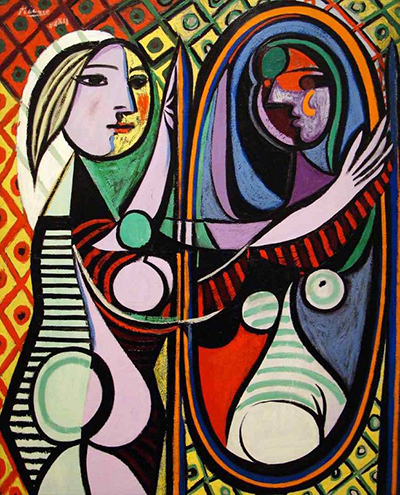
Pablo Picasso, Girl Before A Mirror, 1932

Aganjú was the last song I worked on yesterday in the studio for my new album Ipanema Lounge. I had actually gone through a bit a of a crisis with it and I think this was our third studio session working on the song.

The rhythm section, Sandro Feliciano (percussion) and Isaias Elpes (electric bass), both from Brazil, had created some amazing grooves and my vocal track was in a complementary, nicely contrasting sultry style. I was aiming for a similar style like on In The Still of the Night, a groovy nujazz version of the Cole Porter classic, which features my voice.

But I still thought Aganjú was – how can I say – ummm, boring. And that we didn’t “own” the song.


I was actually close to taking Aganjú song off the record…

I had first heard the song Aganjú on Bebel Gilberto’s album Tanto Tempo. It was written by the Brazilian musician, songwriter and record producer Carlinhos Brown, whose musical style blends tropicália, reggae, and traditional Brazilian percussion. Later, especially the Latin remix by Thievery Corporation, caught my attention. It expresses my love of a Brazilian and European Nu jazz style that never quite took a foothold in America the way it did in Europe. It was a movement derived from drum & bass that started in the early 1990’s.

Always seeking new material and ideas, I thought Aganjú would be a nice tune to play live, which we still do. Even with a very sparse instrumentation as a trio; with voice, bass and guitar, it works very well as a groovy, atmospheric lounge style song.

When it comes to recording a song that has already been recorded before, you have to make it your own. I absolutely did not want it to sound like a cover version. Or, like Billie Holiday said,

You can’t copy anybody and end with anything. If you copy, it means you’re working without any real feeling. No two people on earth are alike, and it’s got to be that way in music or it isn’t music.

I had already contemplated horn arrangements but thought it would be too costly and time-consuming. But then I thought of simply asking one of my favourite saxophone and flute players to add some movement and interest with some horn tracks in a very last recording session. I booked a three-hour session, which was supposed to give us enough time for recording horns, an additional vocal track, some last mixes, and mastering. I admit I did wonder whether it was a bit daunting with so little time…


Veteran Jazz Musicians

Robert Kyle, a multi-instrumentalist and composer, who also just released a new album himself, came in to the studio. I was thrilled with my co-producer’s idea of creating some friction and dissonances, which was ultimately the direction in which I had planned on going with the vocals. Robert played and improvised multiple amazing tracks on tenor and soprano saxophone and some beautiful and haunting parts on the alto flute that you will recognize in the intro of the song. I added another vocal track, the mix was done – et voilà! The track became a wonderful conversation between the vocals and the woodwinds over a very infectious Nu jazz groove.

Listen and download the track here:

This is exactly where not only excellent players, who can sight-read and improvise on the spot, but a production team like Greg and Nolan Shaheed are crucial for any record to sound as good as Ipanema Lounge simply does. Nolan, whose studio I have been recording in for years, is a veteran trumpet player. He has toured with greats like Stevie Wonder and recorded with many others. You can hear him on two songs of the album too. He played Flügelhorn on One Note Samba and on Sway you can hear his sassy trumpet ad-libs that add a flair very reminiscent of Cuban Mambo bands of the 1950’s.


Magical Connections

Suddenly, sitting there in the studio, while the end mix was being done, my thoughts started to drift. I think the fact that Nolan is also a world-class, medal-winning runner made me think of the current 2016 summer Olympics. They were being held in Rio de Janeiro – the very place the song Aganjú stems from. Athletes, like any performer, won’t survive if he or she is not dedicated to their craft by striving for continuous improvement and stamina. It occurred to me that this was occurring at the same time we were recording those last fragments. It all seemed magically connected and suddenly I realized, that’s exactly what the song is about.

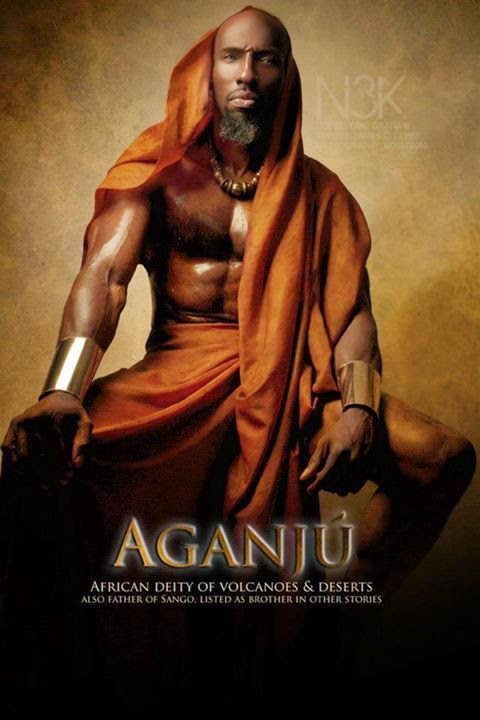
The Portuguese lyrics are really hard to translate. But the essence of the song and the name “Aganjú” is that of the African deity of volcanoes and deserts. They are believed to spread magic and protection over Brazil, whose religious culture was originally brought to the country by the African slaves.

In an interview Bebel Gilberto, said about the phrase:

‘Aganjú’ ‘Aganjú’ is everywhere, in San Francisco, in New York. People get so hypnotized by this song, so maybe that is a good thing, they see the religion in my music.

Music has always had a place in the history and practice of all religions of the world through the meditative use of chant and hymns during liturgical celebrations. In his book, Musicophilia: Tales of Music and the Brain, the British neurologist Oliver Sacks underscores the power of music to console, nourish and even save us from despair. Both Aganjú’s lyrics and in its trance-like mood – which was ultimately, what I was looking to reinterpret – are expressed as devotion to the saints for protection, good health, and a better life.

aganju

I suddenly remembered another interesting link. The origins of the Olympic games in ancient Greece are deeply rooted in mythology and attributed to the gods. The athletes believed their training honoured these gods, and that victory was a sign of favour from a deity.


Musical Dedication & Inspiration

I finally felt it was all coming together but not only musically. I was suddenly so aware of the principle of dedication and inspiration. Of how deeply connected they are. That one doesn’t exist without the other.

While Olympians were performing at their highest skill level in Rio de Janeiro, after decades of practice, determination, and sacrifice, we as musicians were the same way. And during that very recording session, the god Aganjú seems to have blessed us with that magical spark – that can even, when the most virtuous musicians record or play together, sometimes be missing.

For Aganjú we were able to create that magical spark, the essence of spirituality – that very link that connects us, humans, to music and something larger, divinity.


DOWNLOAD your copy of Aganjú here

Or – if you liked this post, why not simply…

Press Release: New Album Frances Livings’ Ipanema Lounge


 : : FOR IMMEDIATE RELEASE : : MOONTRAXX, LOS ANGELES, SEP. 2016 : :

Capturing a rich atmosphere of cultural diversity, this sensual, multi-lingual world jazz album, with songs in French, English, Spanish and Portuguese, guarantees to carry you along on an emotional journey.

Moontraxx Records & Music Productions proudly presents the release of Frances Livings’ new album, Ipanema Lounge. The official release party and live show will take place on Thursday, September 15, 2016 at 7pm at Genghis Cohen, Los Angeles. If you are a member of the press please contact us here to receive a free copy and a VIP spot on the guest list.

                      Whenever I meet a new song, I fall madly in love with it. I think, why haven’t I met you before?

                                                                                                ~ Frances Livings

The multi-lingual world-jazz album Ipanema Lounge, produced by the artist Frances Livings in collaboration with the composer, arranger and guitarist Greg Porée for Moontraxx Records Los Angeles, captures a rich atmosphere of cultural diversity.

As a vocalist and a songwriter, Frances Livings has always been drawn to the unique crafting of a song, to its rhythm, melody, texture, linguistics and story. Frances discovered early in her career that you don’t have to be a native of any country to become attached to its culture. Another source of inspiration were her travels, like extensive stays in Southern Europe, and from having lived and worked in the multi-ethnic melting pot Los Angeles for the last decade. Bringing to this album even more than her deep love of these cultures, she choose a foreign language repertoire. She selected songs written by artists native to countries such as France, Mexico and Peru, whose tunes with their unique phonetical sounds evoke a very classy and lush atmosphere.

The cello is considered to be one of the most expressive and satisfying instruments to listen to. Its ability to speak beautifully whether in a low or high register makes it a joy for composers to write for. Frances’ alto voice resonates in the same manner. With her richness of overtones, she brings a wide range of emotion and passion to each song, truly a gift for the listeners.

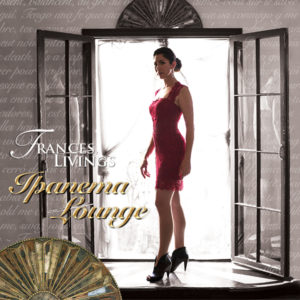
COVER_Ipanema Lounge Frances 600x600The album’s thirteen songs, in French, English, Spanish and Portuguese, guarantee to carry you along on this emotional journey. With each new melody, you are immersed into a new locale, yet never fully leave the last one. They will transport you to the contemporary bars and lounges of urban metropolises, where French art house chansons, soulful American standards and groovy Brazilian music have had their undeniable impact on today’s global music and art culture.

The musical ensemble succeeds in bringing out the colours of these tunes, which range from contemporary to classical – the oldest song being from 1946. The jazz standard One Note Samba is a perfect example of the musical imagination and refreshing engagement that was brought to the production.

On Corcovado, Waters of March, Aganjú and One Note Samba, Greg Porée re-harmonized and restructured their arrangements, giving a brand new perspective to these familiar songs. Joey Heredia created an enticing drum pattern that possesses the dramatic nuances of a New Orleans march and that compliments Trey Henry’s moody bass in the intro and his syncopated patterns in the verse and bridge. These killer grooves Greg contrasted with steel string acoustics that were used to create dissonant pads for Frances’ playful vocal.

Rhythmically, Sandro Feliciano (percussion) and Isaias Elpes (electric bass), originally from Brazil, contributed very fresh cultural perspectives in developing their parts: On Jardin d’Hiver they were playful and danceable, on Aganjú and Come Closer the percussion and bass underpinnings were in a contemporary, sultry and passionate Nu Jazz style, and on Hoy they captured the flavours of Peru and Mexico. The exotic flairs of Argentina and Paris were brought to Hoy and Jardin d’Hiver by Mariano Dugatkin with his bandoneon.

On the ballads Dansez Maintenant, La Puerta and Pour te Plaire, the accompaniment for Frances’ intuitive vocal delivery required the highest level of experience, technical skill and sensitivity. The jazz veterans Jeff Colella on piano and Trey Henry again on double bass, along with Frances’ vocals, took these ballads way past the generic renditions one normally hears. Joe Ayoub played with similar musical insight on double bass on Sway and Waters of March. Darrell Diaz, a Los Angeles veteran, went way beyond the norm with his creative solos in Tell Me All About It and Waters of March, including his tasteful keyboard support on Jardin d’Hiver, Come Closer, Hoy and Sway.

For Dindi, Waters of March, Hoy and Corcovado Greg Porée created signature parts on the classical guitar that are elegantly cohesive in nature and especially impactful on Waters of March. Instrumentally, this set the stage for Frances’ and the band’s superb performance. On Dindi her beautifully crafted vocal was complimented by the linear sounds of an almost whimsical archtop guitar. For Dansez Maintenant and Pour the Plaire the atmosphere was the intimate, late night jazz club that also suited the sound of that guitar.

One of the four guest soloists was Paul Cartwright on violin who added an imaginative and atmospheric solo to the already haunting track Come Closer. John Nau did the same on electric piano for Corcovado. The studio veteran Nolan Shaheed’s trumpet ad libs on Sway take you right back to Cuba of the 1950’s, and when faced with the challenge of playing a solo over completely new chord changes for One Note Samba, Nolan rose to the occasion and took the song to new heights. On Aganjú, the interplay between Robert Kyle’s multi-layered flute and saxophone tracks and Frances Livings’ vocals brought a unique sensuality and Nu Jazz feel not previously heard on this Latin hit song.

The song sequence reflects the cycle and harmony of a day. Its moods flow through us as we awake, engage, dance, mourn and love. Some songs convey a playful attitude, like the staccato romance of possibility of Jardin d’Hiver that opens the morning. As the hours count noon, the poetic Waters of March followed by Dansez Maintenant meander us into the afternoon. Aganjú transports us into evening with its sultry tone. Come Closer, penned by Frances and the German bassist and songwriter Volker Schwanke, captures the intensity of longing and never attaining. The Portuguese ballad La Puerta exhibits a sensual flare for the dramatic and Corcovado evokes the serenity of dusk.

Sway, originally written by a Mexican composer and made famous by Dean Martin, is a flirtatious invitation for more. We transcend twilight with Pour te Plaire, an adaption of Glenn Miller’s famous jazz standard Moonlight Serenade. This French version is a perfect example of Frances Livings’ vision – how shifting language alters atmosphere, meaning and scenery. Passion flares our senses as we lay exposed, open to the magic of the night.

Each language is like a beautiful musical composition, made up of its own unique melody, rhythm and form.

                                                                                                ~ Frances Livings

PRESS CONTACT: by email Moontraxx@icloud.com by mobile phone (1) 323 719-0747

COMPANY WEBSITE: http://www.moontraxx.com

ARTIST’S WEBSITE: https://franceslivings.com


Staying in Touch…

27_Band_Frances-Livings_Ipanema-Lounge_Molly-Malones_2016-02-22-cropped


We had a marvelous time playing last month at Molly Malone’s and the audience was full of praises too which is always very satisfying! Like the following tweet expresses:

So to make sure you know what is going on, there are multiple options: The safest way to stay up to date is to sign up to my mailing list here:


And to be notified when I will be playing in your area – track me!

Of course you can always just check the “Shows” tab on this website here. Also, don’t forget, there’s Facebook and Twitter. The best way on Facebook is to subscribe to my “events” here:
ICON_Subscribe button on Facebook